 Know Thy Body
Field guide/Organs · Digestive system
Know your small intestine
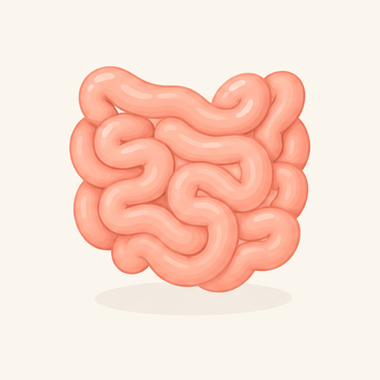
Even with “small” in its name, it’s actually the longest stretch of your digestive tract. Most of the nutrients, vitamins, and minerals from your food cross into your bloodstream right here.
- Proper name
- Small intestine Intestinum tenue
- Length
- Over 20 ft (6 m)
- Parts
- Duodenum, jejunum, ileum
- Transit
- Up to about 6 hours
Where it sits and how it connects
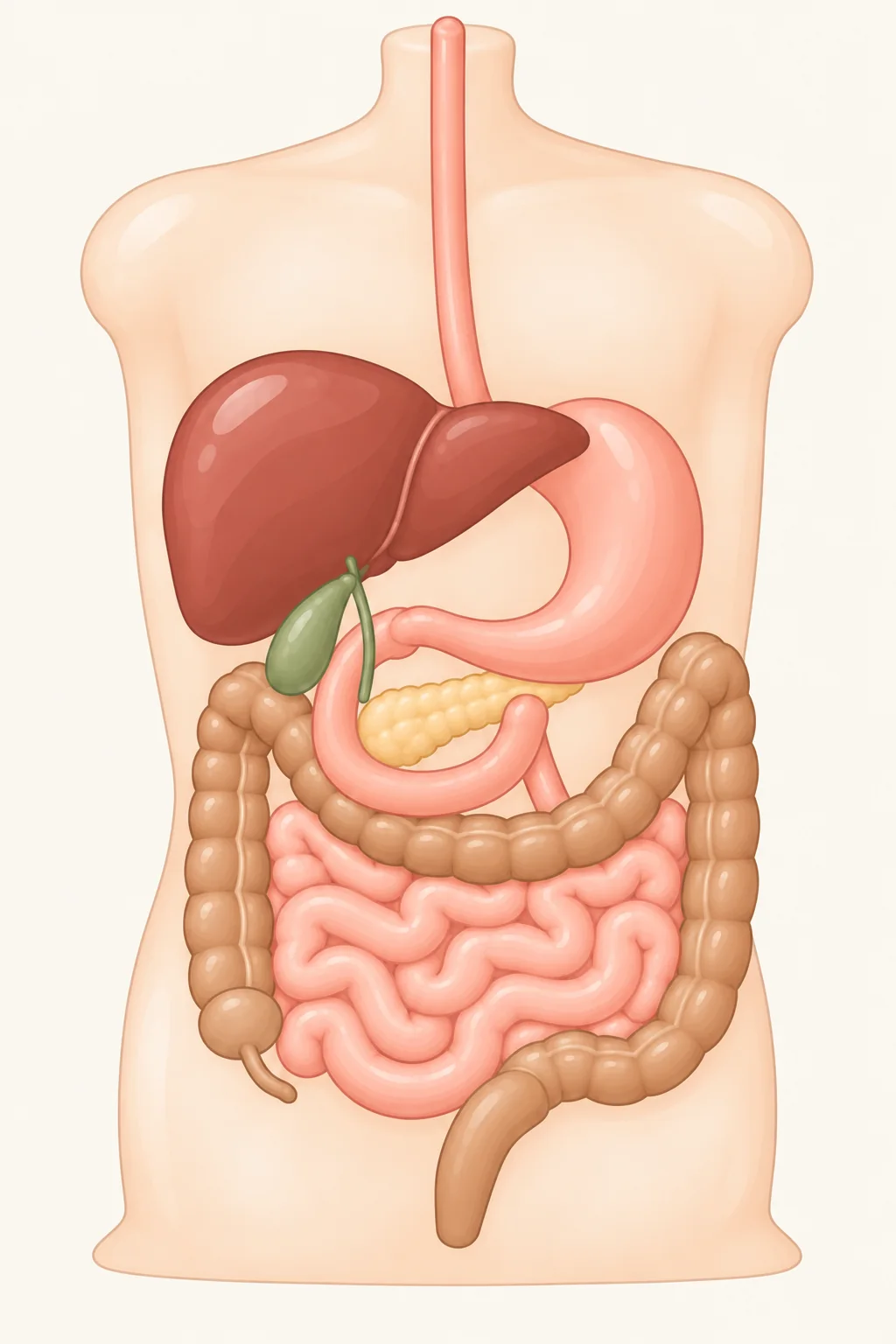
bladderDuodenumRectumEsophagusBody’s rightBody’s left
Lit in terracotta: the coiled small intestine filling the center of your belly, framed on three sides by the large intestine. Tap any organ to view its page.
Your small intestine packs its coils into the center of your abdomen behind your belly button, neatly framed top and sides by the large intestine.
It connects from the bottom exit of the stomach and runs through three sections: first a C-shaped curve called the duodenum (~10 in / 25 cm, wrapping around the head of the pancreas), then the jejunum (~8 ft / 2.4 m), and finally the ileum (~12 ft / 3.6 m), which meets the large intestine in the lower right belly.
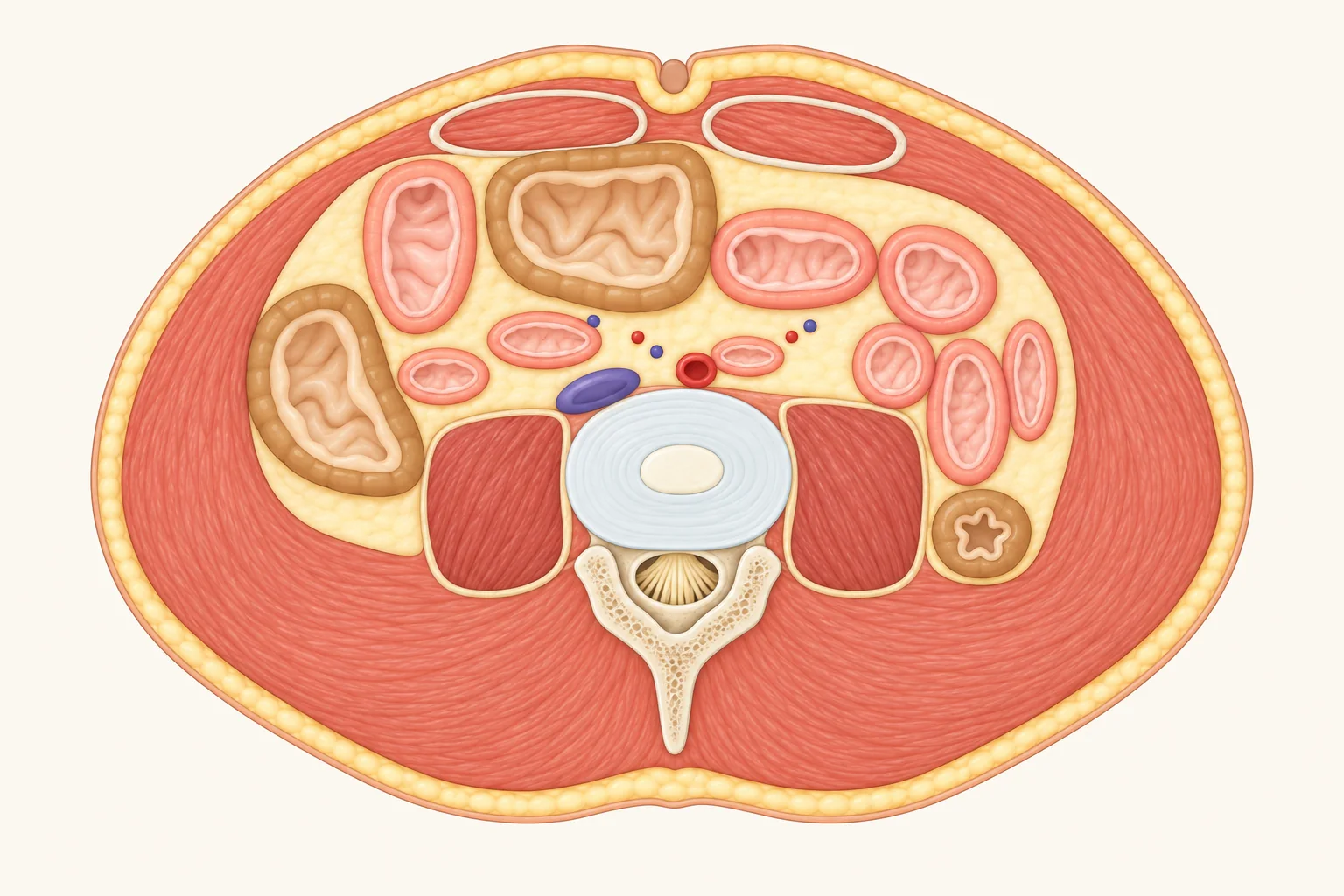
colonTransverse
colonDescending colonSmall
intestinePsoasDiscAortaInferior
vena cavaAbdominal
muscleBelly
buttonCauda equinaLumbar vertebraFront · navelBack · lower backRL
What it does
- Mix with bile and pancreatic juiceAs soon as acidic food paste enters the duodenum, bile (made in the liver, stored in the gallbladder) breaks fats into tiny droplets, and juices from the pancreas neutralize stomach acid while digesting carbohydrates, proteins, and fats.
- Absorb nearly all your nutrientsThe inner lining isn’t smooth—it stacks circular folds, millions of tiny finger-like villi, and even tinier microvilli on every cell, multiplying surface area so amino acids, simple sugars, fatty acids, vitamins, iron, and calcium pass efficiently into blood and lymph vessels.
- Push leftovers along within hoursMuscular waves sweep unabsorbed fiber, leftover water, and shed cells forward into the large intestine over up to about 6 hours, still thin and nearly liquid when they arrive.
What your stool can tell you
The quickest hint that your small intestine isn’t absorbing well is unabsorbed fat turning up in poop—since dietary fat needs both bile and pancreatic enzymes before the small intestine pulls it in. Over months, missing iron, folate, or vitamin B12 can also show up on your tongue and nails.
- Pale, greasy, floating, foul-smelling stoolCalled steatorrhea—a sign fat passed straight through unabsorbed. Damaged small-intestine villi in celiac disease do this, as do missing bile or pancreatic enzymes. One greasy episode usually just follows an extra-fatty meal; if it keeps happening, get checked.Organ clues in poop →
 Repeated diarrhea and bloatingCeliac disease, Crohn’s disease, and irritable bowel syndrome (IBS) can all swing between flare-ups and calm stretches. Lingering or returning symptoms deserve a proper check.Match stool shapes →
- Black, sticky stoolBleeding from a duodenal ulcer gets digested along the rest of the gut, turning stool dark black and tarry; bleeding going upward looks red or like coffee grounds in vomit. Black tarry stool without iron pills or bismuth meds needs urgent ER care.Check the stomach →
Common conditions
- Celiac diseaseAn autoimmune reaction triggered by gluten (a protein in wheat, barley, and rye), not a simple food intolerance. In people with celiac disease, gluten sparks inflammation that flattens the absorptive villi lining the small intestine—causing bloating, diarrhea, greasy stools, tiredness, weight loss, or iron deficiency.
- Crohn’s diseaseA chronic inflammatory bowel disease that can affect any stretch of the gut, most commonly where the end of the small intestine joins the large intestine—bringing cramping pain, diarrhea, fatigue, and weight loss.
- Irritable bowel syndrome (IBS)Very common; scopes and scans usually show normal tissue because the issue lies in erratic gut movement and sensitive bowel nerves—causing recurring belly cramps, bloating, diarrhea, or constipation that often eases after passing stool.
- MalabsorptionWhen villi are damaged, food rushes through too fast, or bile and pancreatic enzymes run short, nutrients stay unabsorbed. Beyond greasy floating stools and weight loss, ongoing low iron, folate, or vitamin B12 causes anemia, exhaustion, a smooth red tongue, or spoon-shaped nails.
When to see a doctor
- Repeatedly pale, greasy, foul-smelling stools that are hard to flush
- Diarrhea, bloating, or belly pain flaring on and off for several weeks
- Unexplained weight loss without trying
- Constant, unexplained fatigue
- A parent, sibling, or child has celiac disease (worth getting screened)
Don’t cut out gluten yet: celiac blood tests and biopsies only catch the reaction while gluten is still in your diet. Going gluten-free on your own beforehand can hide a real diagnosis.
Go to the ER now: bloody stool, or black, sticky, tarry stool; sudden severe belly pain, or severe belly pain while vomiting green bile (possible intestinal blockage). Don’t drive yourself—have someone take you or call an ambulance (911 in the US and Canada, 999 in the UK, 112 in the EU).