 Know Thy Body
Field guide/Organs · Digestive system
Know your esophagus
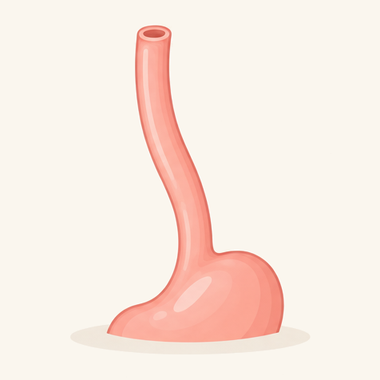
Your esophagus is the muscular tube connecting your throat to your stomach, flattened shut when nothing is passing through. Once you swallow, waves of muscle squeeze down section by section, delivering food in seconds. Heartburn and acid reflux actually happen right here—not in your heart or stomach.
- Proper name
- Esophagus Oesophagus
- Where
- Center chest, behind the windpipe
- Length
- About 10–13 in (25–33 cm)
- Swallow
- 4–8 seconds to reach the stomach
Where it sits and what’s beside it
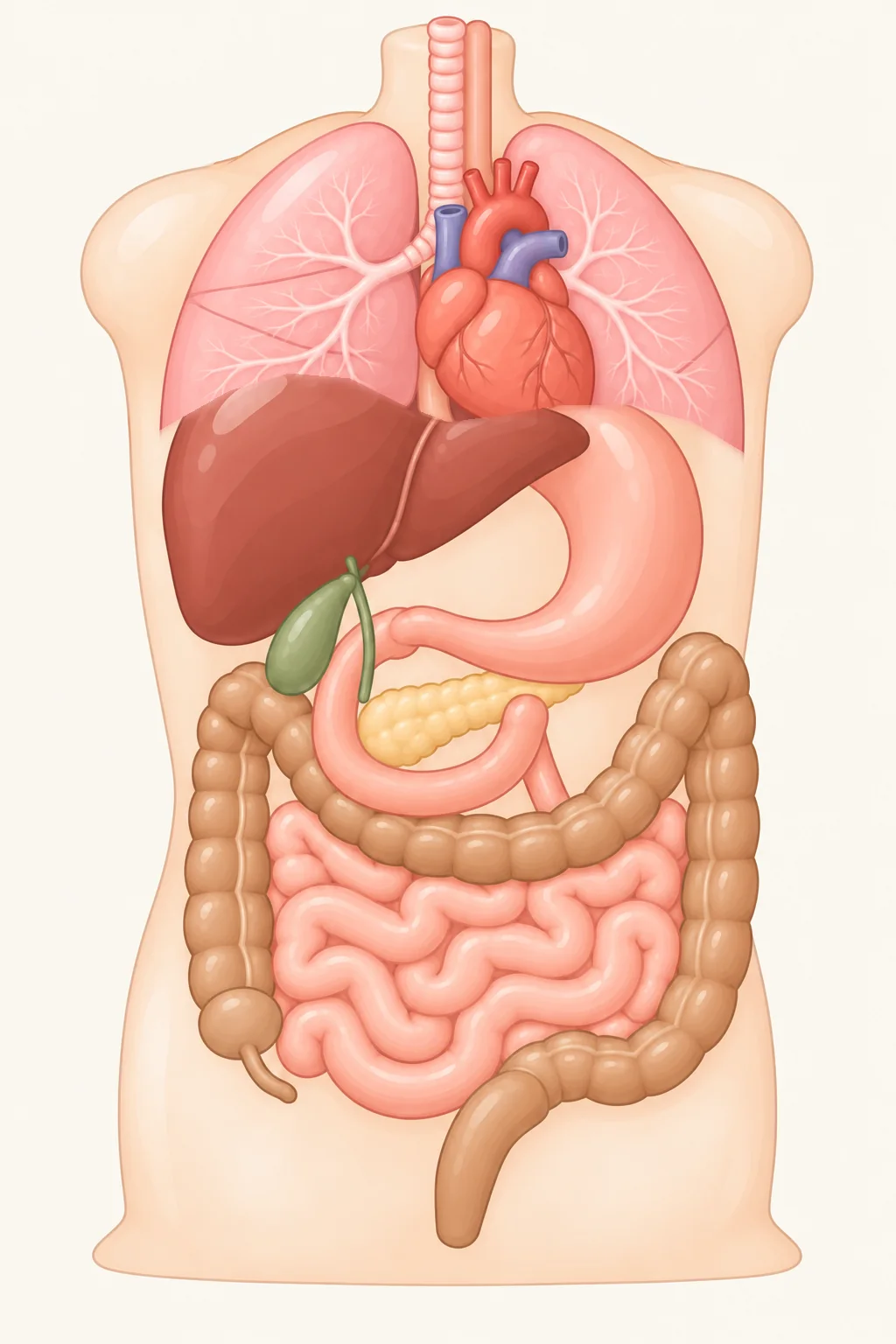
Lit in terracotta: the esophagus running straight down behind the windpipe and heart to enter the stomach. Tap any organ to view its page.
Your esophagus starts right below the back of your throat and travels down the midline of your chest—sandwiched behind the windpipe (lungs) and directly behind the heart, just in front of your spine. It then slips through a small muscular opening in the diaphragm (the esophageal hiatus) to join the top of the stomach.
Because the esophagus sits flush against the back wall of the heart and shares overlapping nerves, strong acid reflux and painful esophageal spasms often feel remarkably like a heart problem—and vice versa.
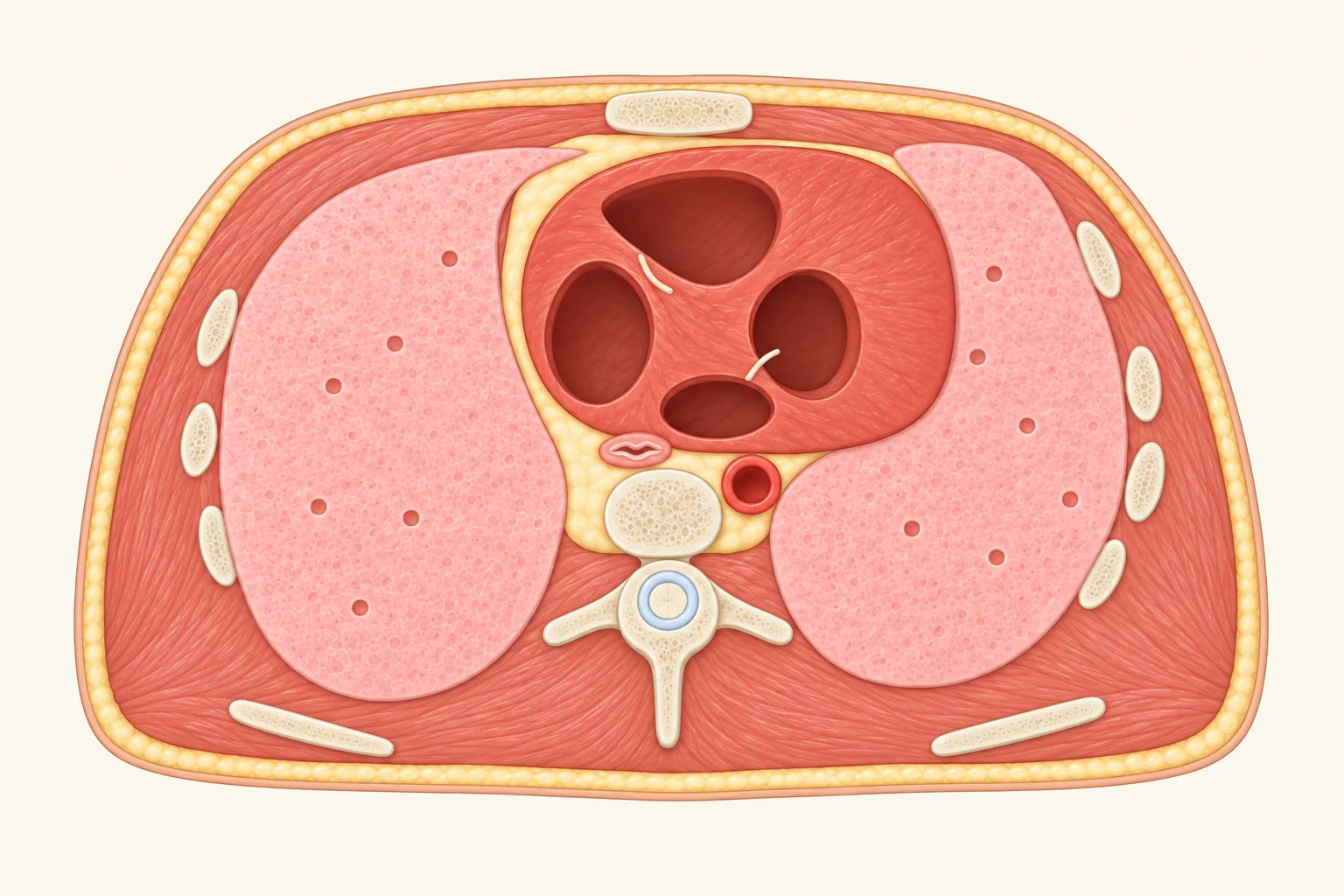
vertebraFront · chestBackRL
What it does
- Push food down in wavesChewed food doesn’t just fall by gravity. Sequential rings of smooth muscle contract behind the bite and relax ahead of it (peristalsis), moving food down into the stomach in 4–8 seconds—even if you swallow lying flat or upside down.
- Top valve keeps air outAt the upper end sits a muscular ring (the upper esophageal sphincter). Between swallows it stays tightly pinched shut so inhaled air goes to your lungs instead of pumping into your stomach, and swallowed food or acid stays down instead of spilling into your airway.
- Bottom valve seals stomach acidWhere the esophagus meets the stomach, another ring (the lower esophageal sphincter) relaxes briefly when you swallow and seals shut afterward. When it relaxes at the wrong moments or weakens, acid splashes upward, causing heartburn and reflux.
- Coat the passage with mucusGlands lining the wall secrete slippery mucus so dry food glides without scraping; the esophagus doesn’t digest food or absorb nutrients, it strictly moves cargo safely down.
Clues it sends out
- Vomiting bright red blood or “coffee grounds”Violent retching can tear the lower esophageal lining (a Mallory-Weiss tear), and swollen esophageal veins in liver cirrhosis (varices) can bleed suddenly and heavily. Blood partially digested by stomach acid looks dark brown and gritty like coffee grounds. Vomiting blood or coffee-ground material belongs in the ER—if you have liver cirrhosis, go even for a tiny amount.Check vomit clues →
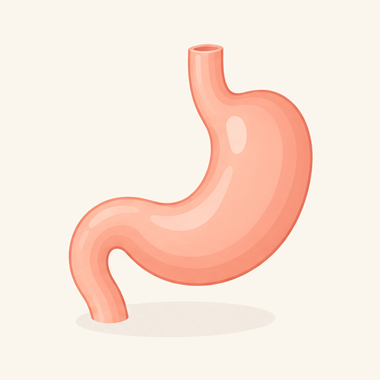 Black, tarry stoolBleeding in the esophagus or stomach travels through the entire digestive tract, turning digested blood jet black, sticky, and foul-smelling (check whether iron pills or bismuth stomach meds explain it first). Black tarry stool without those meds calls for urgent ER care.Match poop colors →
- Burning behind the breastbone, sour taste, eroded teethStomach acid splashing upward burns the unprotected esophageal lining (heartburn) and can creep up to irritate the throat, trigger a dry cough or morning hoarseness, and dissolve tooth enamel over time. Daily heartburn lasting 3 weeks or more needs a medical visit.Throat reflux clues →
 Food sticking or trouble swallowingGulping a dry bite once in a while isn’t unusual. What matters is progressive trouble swallowing (dysphagia)—first meats and bread catch, then softer foods, then liquids—or pain and a feeling of food sitting in the chest. New or worsening trouble swallowing needs an urgent check.
Can you push a stuck bone down with bread?
- Don’t force bread, crackers, or vinegar down on a stuck boneTrying to shove a stuck fish or chicken bone downward with bread, crackers, rice, or big gulps of liquid can wedge the sharp point deeper into the esophageal wall—and near the chest aorta or windpipe, a tear or infection is dangerous and makes endoscopic removal harder. Vinegar won’t soften a bone on the way down and has been documented to burn the esophagus lining. Stop eating right away; Mayo Clinic notes carbonated drinks may help dislodge a soft food bolus only if you’re breathing comfortably, never for sharp bones, batteries, or magnets, which belong in the ER immediately.
- “Heartburn” isn’t your heart—but don’t assume chest pain is just acidHeartburn comes from acid irritating the esophagus directly behind your breastbone. Still, a heart attack can mimic stubborn heartburn or indigestion. If chest pressure or burning won’t settle, spreads to an arm, neck, jaw, back, or belly, or brings sweating, nausea, dizziness, or shortness of breath, treat it as a possible heart emergency (heart).
- Very hot drinks raise cancer riskThe World Health Organization’s cancer agency (IARC) classifies beverages hotter than 149 °F (65 °C) as probably carcinogenic to the esophagus—the heat itself injures lining cells repeatedly, regardless of whether it’s coffee, tea, or soup. Let steaming mugs cool a couple of minutes before sipping, especially if you smoke or drink alcohol, which multiply the risk.
- Stacking pillows for nighttime reflux can backfirePiling extra pillows only bends your neck and creases your waist, pressing on your belly and squeezing stomach acid upward. Gravity only helps if your whole upper torso slopes upward—either by raising the head frame of the bed 4–8 in (10–20 cm) on risers or sleeping on a full wedge pillow.
- Never dry-swallow pillsCertain capsules and tablets—such as doxycycline, potassium chloride, vitamin C, NSAIDs, and bisphosphonates for osteoporosis—can stick against the moist wall and burn a painful ulcer. Swallow pills with plenty of water and stay upright for at least 30 minutes afterward.
Common conditions
- GERD (gastroesophageal reflux disease) and hiatal herniaRoughly 1 in 5 adults in North America experience weekly heartburn or acid regurgitation. When reflux turns frequent or damages lining tissue, it’s GERD—sometimes worsened by a hiatal hernia, where the top of the stomach slips slightly up through the diaphragm. Eating smaller portions, staying upright after meals, finishing dinner 3–4 hours before bed, limiting alcohol and smoking, and loosening tight waistbands all help.
- Barrett’s esophagusRoughly 5–15% of people with long-standing GERD see their lower esophageal lining shift into thicker, intestine-like cells to withstand acid. It adds no new symptoms of its own, yet carries a slightly higher risk of esophageal cancer over time, so doctors monitor it periodically.
- Esophagitis and stricturesAcid, eosinophilic allergies, infections, or lodged pills can inflame the lining. Repeated scarring can narrow the tube into a stricture, making solid foods catch or stick.
- Esophageal varicesWhen severe liver scarring (cirrhosis) blocks normal blood flow, pressure backs up and swells fragile veins lining the lower esophagus. They cause zero symptoms until they burst and cause life-threatening blood vomiting.
- Esophageal cancerAdenocarcinoma (often linked to chronic GERD, Barrett’s esophagus, and carrying extra weight) and squamous cell carcinoma (strongly tied to smoking, heavy alcohol use, and very hot drinks) often stay quiet early on; progressive trouble swallowing solids then liquids and unexplained weight loss are the classic warnings.
When to see a doctor
- Heartburn most days for 3 weeks or more, or reflux that doesn’t improve with lifestyle changes and over-the-counter antacids
- Pain when swallowing, or a steady sense that food isn’t sliding down smoothly
- Unexplained weight loss or lasting loss of appetite
- A persistent cough or hoarse voice that doesn’t go away
- Age 40–50 or older with years of frequent GERD, known Barrett’s esophagus, heavy smoking/alcohol use, or close family history—ask whether screening endoscopy makes sense
- Feeling like food keeps catching in your throat or chest after meals
- Swallowing suddenly gets harder, keeps worsening, or brings coughing and choking on food or drinks
- You vomited blood earlier, even if bleeding stopped and you feel okay now
- Vomiting lasting more than 2 days
- Reflux or indigestion paired with weight loss, repeated vomiting, or upper-belly pain
- A sharp object (fish bone, poultry bone, toothpick, fruit pit), button battery, or magnet is stuck—don’t wait or force bread down
- You can’t swallow your own saliva, are drooling steadily, or are struggling to breathe
- Fever, neck swelling or pain, chest pain, or vomiting blood develops after swallowing something
- Vomiting large amounts of bright red blood or dark “coffee grounds”
- Anyone with liver cirrhosis who vomits blood, in any amount
- Vomiting blood alongside dizziness, weakness, confusion, fast breathing, cold clammy pale skin, belly pain, or black stool
- Sudden chest pain, pressure, tightness, or burning that won’t quit—or spreads to an arm, neck, jaw, back, or belly, or brings sweating, nausea, dizziness, or trouble breathing (possible heart attack)