 Know Thy Body
Field guide/Organs · Urinary system
Know your kidneys
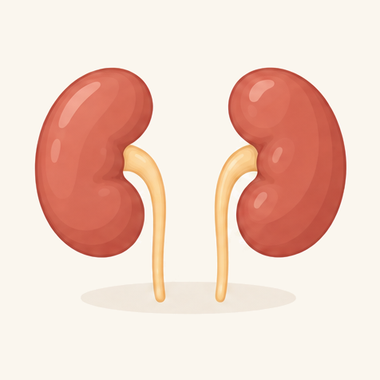
Your two kidneys rest against your back, tucked under your lower ribs on either side of the spine. Every day they filter about 150–190 quarts (140–180 L) of fluid from your blood, reclaim roughly 99% of it, and leave about 1–2 quarts (1–2 L) to leave as pee.
- Proper name
- Ren
- Where
- Mid-back under the ribs, beside the spine
- Size
- Fist-sized each, about 4–5.5 in (10–14 cm) long
- Filters
- About 150–190 quarts (140–180 L) a day
Where they sit
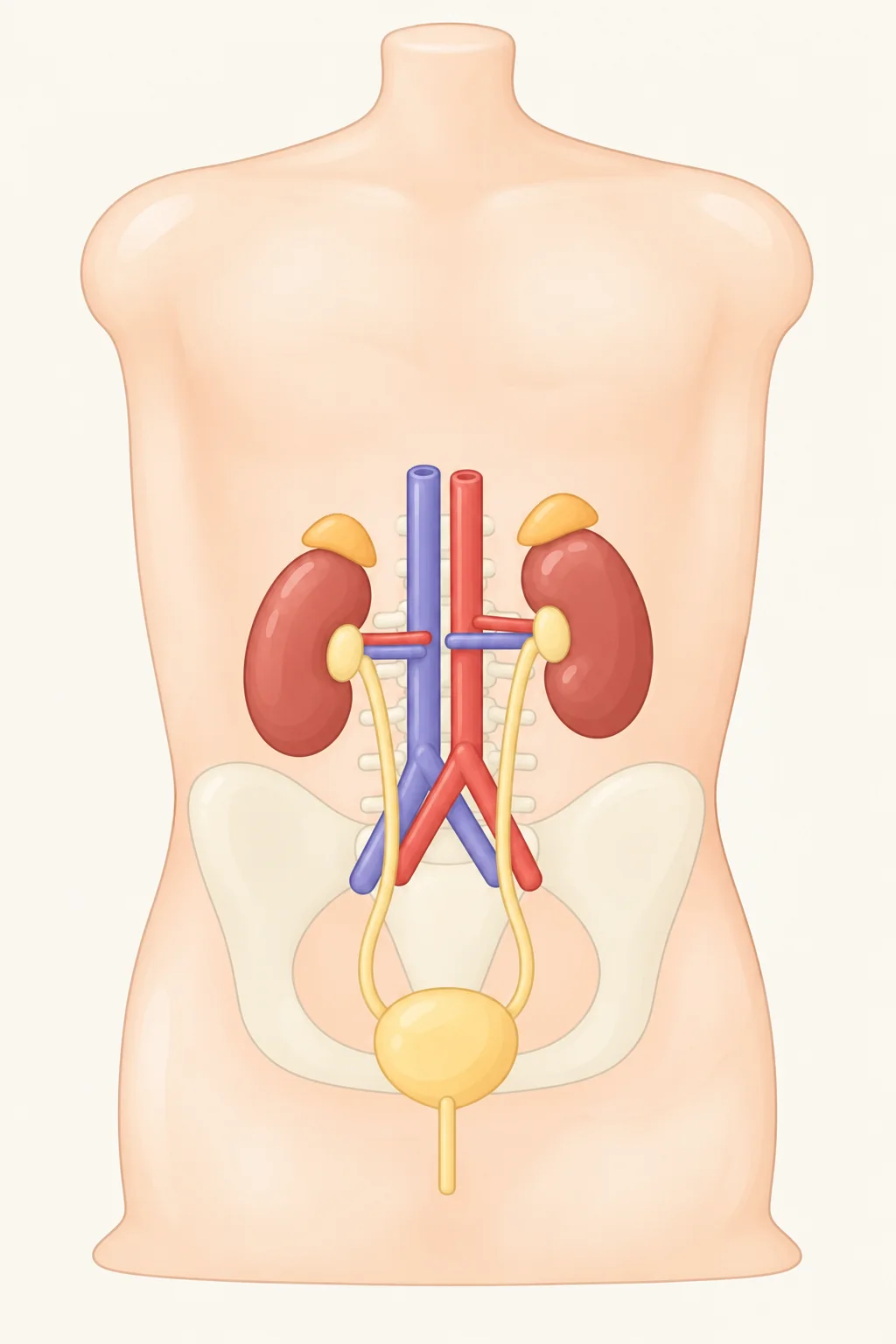
Your kidneys sit toward your back, one on each side of the spine right under your lowest ribs, with the bottom two ribs shielding their upper halves. Because the liver presses down on the right side, the right kidney sits a little lower than the left. Each kidney also wears a small adrenal gland on top.
They sit behind digestive organs like the stomach and intestines. From each kidney runs a tube about 10–12 inches (25–30 cm) long called a ureter, whose muscle waves push pee down into the bladder. The ureters enter the bladder wall at an angle so it acts like a one-way valve, letting pee in without backing back up.
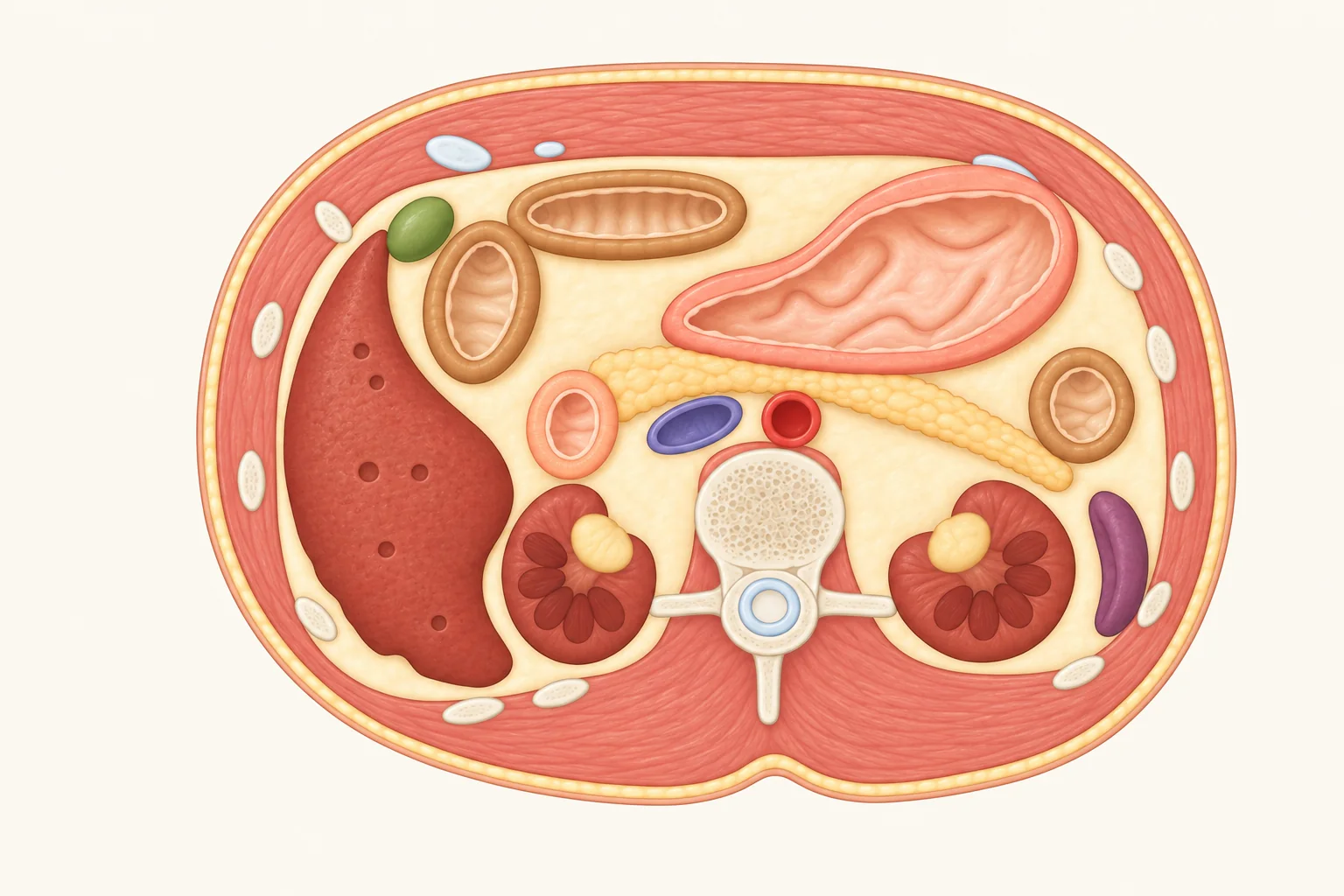
Looking up from the feet: front is at the top, and the body’s right side is on the left. Both kidneys sit all the way in the back on either side of the spine, behind the liver, stomach, pancreas, and gut. See all cross-sections →
What they do all day
- Filter wasteBlood flows nonstop through millions of tiny filters inside each kidney, clearing urea from digested protein, creatinine from normal muscle wear, and everyday acid produced by cells. Routine kidney blood tests check creatinine and estimated GFR (eGFR) to see whether waste is building up instead of leaving.
- Balance water and saltsRoughly 99% of the filtered water and useful nutrients are pulled straight back into your blood, leaving a small stream of concentrated waste as pee. Kidneys fine-tune sodium, potassium, calcium, and phosphorus hour by hour – when those slip out of balance, nerves and muscles quickly misfire.
- Regulate blood pressureWhen blood flow into the kidneys drops or pressure runs low, they release an enzyme called renin to tighten blood vessels and hold onto salt and water, pushing pressure back up. Over time, high blood pressure damages the kidneys too – and failing kidneys often drive stubborn high blood pressure.
- Trigger red blood cell productionWhen oxygen runs low, the kidneys release a hormone called erythropoietin (EPO) that tells bone marrow to make more red blood cells. About 85% of your body’s EPO comes from the kidneys, which is why moderate-to-advanced kidney disease often brings anemia.
- Activate vitamin DVitamin D from food or sunlight isn’t ready to use until your kidneys convert it into its active form, which then helps your small intestine absorb calcium and phosphorus to keep bones strong.
What pee can tell you
Kidneys are hidden deep behind your ribs, yet the pee they make – along with swelling and even subtle nail changes – offers a few early clues: color, lasting foam, blood, and how much you pee in a day. Still, most kidney disease causes zero pain and looks normal in the toilet early on, so blood and urine tests are the only reliable way to catch it early.
- Pale or dark yellowWhen you’re low on water, your kidneys hold fluid back and make pee concentrated and dark; when you’re well hydrated, they let extra water go and pee turns pale straw. One dark pee after sweating doesn’t signal kidney trouble – drinking water usually clears it right up.Check your pee color →
- Foam that won’t flush awayA fast stream or concentrated morning pee makes big bubbles that pop quickly, which is normal. When kidney filters leak protein, fine, tight foam builds up and lingers (swollen ankles or puffy eyes can also involve the heart). Even then, only about a third of people checked for foamy urine turn out to have high urine protein. Get your kidneys checked if foam keeps happening for days, gets worse, or comes with swelling in your hands, feet, ankles, or around your eyes.See pee colors →
- Pink, cola-colored, or bloodyInflamed kidney filters can leak red blood cells, turning pee pink or cola-brown – though tiny amounts are often only caught under a microscope. Kidney stones and bladder or urinary tract infections also cause blood in pee; dark brown pee can also point to liver disease, heavy muscle breakdown (rhabdomyolysis), or severe dehydration. See a doctor promptly if you see blood in your pee or aren’t sure.See pee warning signs →
- Suddenly peeing much lessPutting out far less pee than usual can mean severe dehydration as your kidneys conserve water – or acute kidney injury, where filtering drops abruptly. See a doctor the same day if you’re also very thirsty, nauseous, dizzy, drowsy, swollen in your legs or feet, or haven’t peed all day.See organ clues in pee →
- Half-and-half nailsWhite on the half closer to the cuticle and brown or dark toward the tip, with a sharp dividing line. This uncommon nail pattern can show up alongside chronic kidney disease and is worth a checkup, though it isn’t a diagnosis on its own. Mention any unexplained new nail changes at your next checkup.Check your nails →
Back pain and common kidney myths
- Low back pain is rarely your kidneysLower back pain is common and usually comes from a strained muscle or ligament, easing within a few weeks. True kidney pain sits higher and deeper – under the ribs on one or both sides of the spine – and often comes with fever, burning pee, blood in pee, or nausea. Kidney stone pain comes in sharp waves and can shoot toward your groin.
- You don’t need a “kidney cleanse”Healthy kidneys already filter waste 24 hours a day. No detox tea, juice flush, or cleanse supplement scrubs them out – and back stiffness or fatigue doesn’t mean your kidneys are failing. The only way to check kidney health is blood creatinine/eGFR and a urine protein test.
- “Natural” doesn’t mean kidney-safeAs the National Kidney Foundation warns, herbal supplements aren’t tested or approved by the FDA for purity, dose, or safety before sale. Some contain hidden potassium or phosphorus, clash with prescription drugs, or directly injure the kidneys – including herbs containing aristolochic acid. Ask your doctor before taking any new supplement, powder, or herbal remedy.
- Painkillers aren’t all the sameAnti-inflammatory NSAIDs (such as ibuprofen and naproxen) cut blood flow into the kidneys and can injure them in high doses or over long stretches. If your kidneys are healthy, use the lowest effective dose briefly as directed. If you have kidney, heart, or liver disease, high blood pressure, a kidney infection, or take blood pressure meds or water pills, ask a doctor first. At recommended doses, acetaminophen generally spares the kidneys – just avoid accidental overdose.
Common kidney problems
Most kidney disease has no symptoms early on. If you have diabetes, high blood pressure, heart disease, or a family history of kidney disease, ask your doctor about routine urine and kidney blood tests.
- Chronic kidney disease (CKD)Slow, lasting loss of kidney filtering, most often driven by high blood pressure and diabetes. Early stages rarely hurt; fatigue, swollen hands or ankles, shortness of breath, itching, and frequent nighttime peeing appear later. In the US, more than 1 in 7 adults (about 35.5 million people) have CKD, and 9 in 10 don’t know it – even among those with severely reduced kidney function not yet on dialysis, roughly 40% are unaware. Caught early, medication and blood-pressure/sugar control keep most people stable without reaching kidney failure.
- Kidney stonesHard pebbles built from minerals and salts crystallizing in pee. Tiny stones pass unnoticed; larger ones wedging in a ureter trigger severe waves of flank or back pain that often shoot down toward the groin. About 1 in 11 people in the US get a kidney stone at some point, and stones tend to come back. Prevention leans on plenty of fluid – usually 8–12 cups (2.5–3 L) a day – cutting back on salt, and eating normal amounts of dietary calcium.
- Kidney infection (pyelonephritis)Often starts when bacteria climb from the bladder up the ureters to one or both kidneys, especially in women. Unlike an uncomplicated bladder infection, it brings fever, side or lower-back pain, and nausea, and requires a full 7–14 day course of antibiotics. Leaving it untreated risks sepsis.
- Acute kidney injury (AKI)A sudden drop in filtering over hours or days – triggered by severe dehydration, major infection, blood loss, a stone blocking urine flow, or medication overuse (including NSAIDs). Early signs can be subtle before pee output drops sharply alongside nausea, leg swelling, and heavy fatigue or drowsiness. Left untreated it can be life-threatening; when the cause is found and treated promptly, many people recover in weeks to months.
- Supplement and aristolochic acid injuryCertain plants in the Aristolochia family contain aristolochic acid, a known Group 1 human carcinogen that scars kidney tissue into failure and causes urinary tract cancers. In the 1990s, more than a hundred people in Belgium developed severe kidney scarring and cancer after taking weight-loss herbs accidentally mixed with aristolochic acid. Even today, regulators warn against unregulated herbal weight-loss pills, teas, and imported remedies that lack verified ingredient testing.
When to see a doctor
- Foamy pee that lasts for days, gets worse, or comes with swelling in your hands, feet, ankles, or around your eyes
- Ongoing fatigue, itchy skin, swollen ankles, peeing often at night, or poor appetite with no clear cause
- You have diabetes, high blood pressure, heart disease, or a family history of kidney disease and need regular urine and kidney screening
- Low back pain that doesn’t ease after a few weeks at home, limits daily movement, won’t settle with rest, or worsens at night
- Blood in your pee, or you’re not sure whether pee is bloody
- UTI symptoms (burning or frequent peeing) paired with fever or chills, pain in your back or side under the ribs, nausea or vomiting, blood in your pee, not peeing all day, or pregnancy
- Suspected kidney stone with severe pain, fever or shivering, or vomiting so much you can’t keep fluids down
- Much less pee than usual along with intense thirst, swollen feet or legs, dizziness, or drowsiness
- Back pain that starts suddenly and severely, worsens quickly, or comes with fever, chills, or feeling generally unwell
Go to the ER now: fever and back pain with confusion, extreme drowsiness, or trouble speaking; sudden total inability to pee; or back pain with numbness or weakness in both legs, numbness around the groin or anus, or loss of bowel or bladder control. Don’t drive yourself: have someone take you, or call an ambulance (911 in the US and Canada, 999 in the UK, 112 in the EU).