 Know Thy Body
Field guide/Organs · Digestive system
Know your large intestine
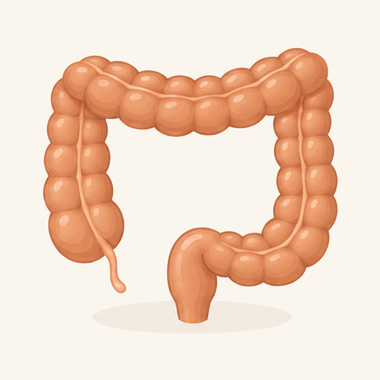
What arrives from your small intestine is still a watery slush. Your large intestine moves it along slowly, pulling water and electrolytes back into your body—mostly deciding how hard or loose your poop will be.
- Proper name
- Large intestine Intestinum crassum
- Length
- About 6 ft (1.8 m)
- Width
- About 3 in (8 cm) across
- Transit
- About 36 hours
Where it sits and what’s inside
bladderDuodenumRectumEsophagusBody’s rightBody’s left
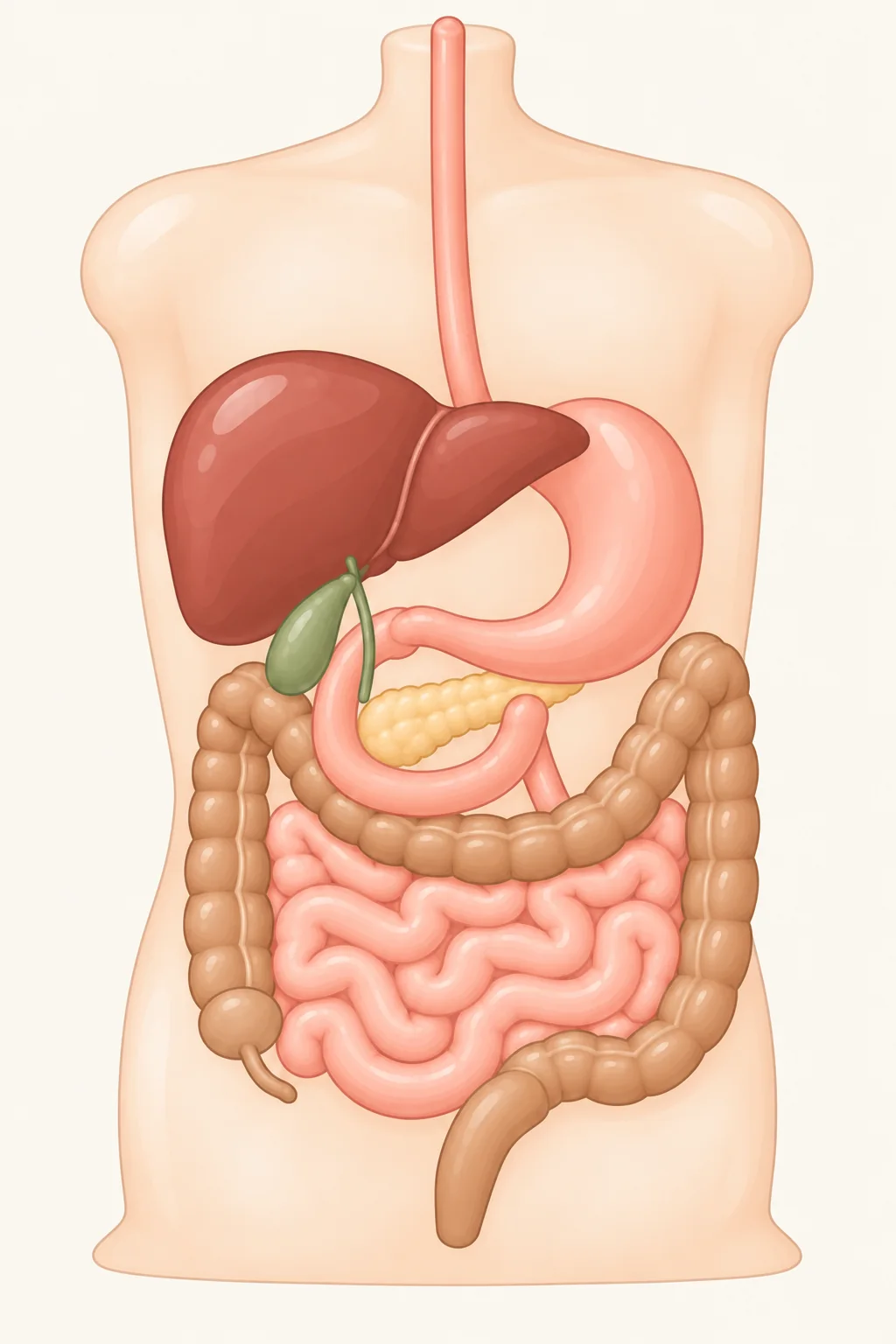
Lit in terracotta: the colon framing the outer belly up the right, across, down the left, and out through the rectum. Tap any organ to view its page.
Your large intestine wraps around the outer edges of your belly like an upside-down U, boxing in the coiled small intestine in the middle.
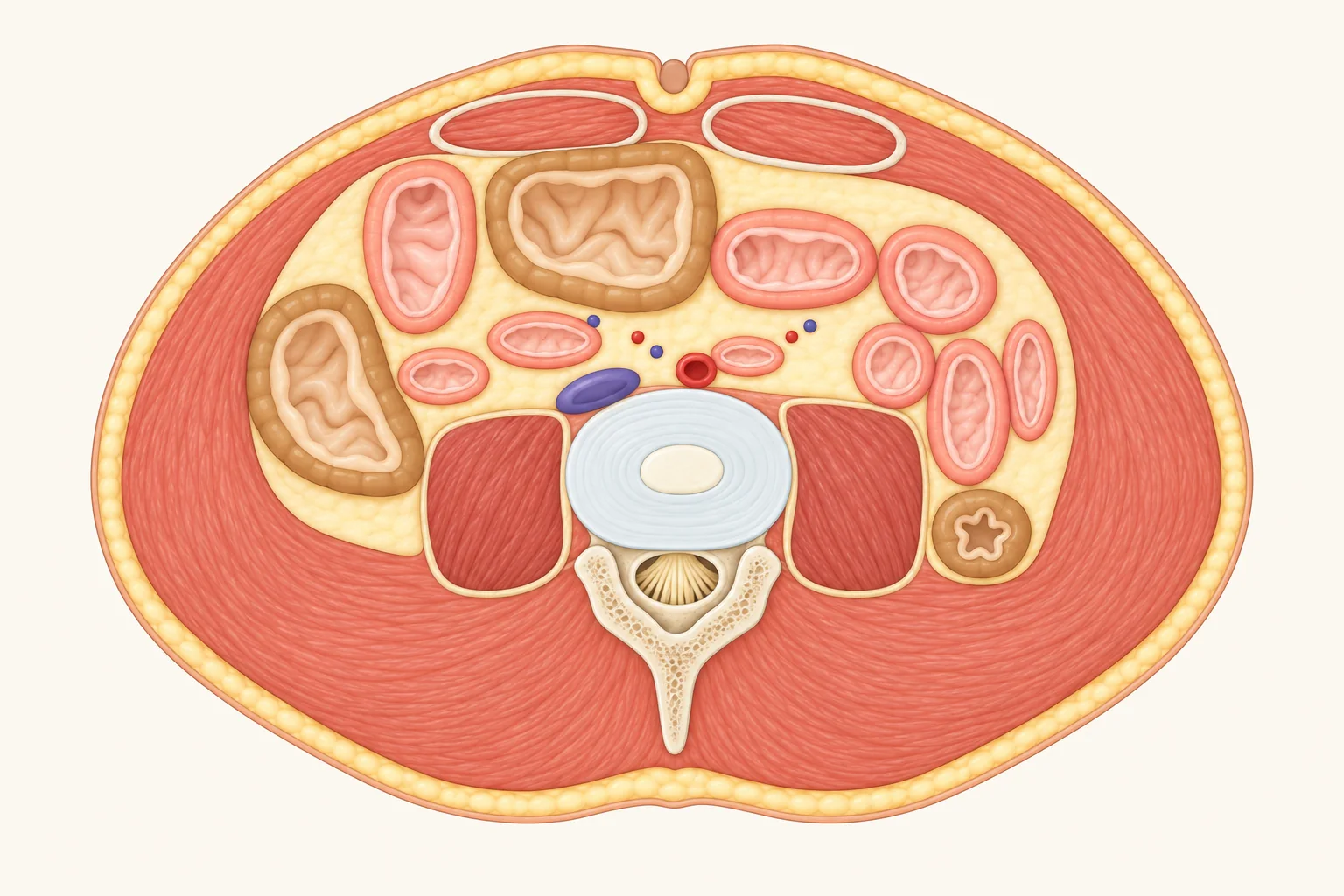
It begins in the lower right belly at a pouch called the cecum (with the small appendix tucked underneath), climbs up your right side as the ascending colon, crosses beneath your ribs as the transverse colon, drops down your left side into the S-shaped sigmoid colon, and ends at the last 5–6 in (12–15 cm): the rectum and anal canal.
colonTransverse
colonDescending colonSmall
intestinePsoasDiscAortaInferior
vena cavaAbdominal
muscleBelly
buttonCauda equinaLumbar vertebraFront · navelBack · lower backRL
What it does
- Reclaim water and saltsLiquid leftovers arrive from the small intestine and take roughly 36 hours to travel through—most of digestion’s whole timeline. Moving slowly lets the colon pull out too much water, leaving hard pellets; rushing straight through leaves watery diarrhea.
- House gut bacteria that ferment fiberTrillions of resident microbes thrive here, fermenting plant fibers your own enzymes can’t digest into fatty acids that nourish colon wall cells, along with vitamin K and some B vitamins. Normal gas is simply the exhaust of those microbes at work.
- Hold stool safely until a toilet is readyAs stool gathers in the rectum, stretch nerves signal the urge to go while ring muscles (sphincters) let you hold on comfortably until you reach a bathroom.
Clues in your stool
 Shape: hard pellets or loose mushThe longer stool sits in the colon, the drier and lumpier it gets; the faster it moves, the looser it comes out. Stool shape is basically your large intestine’s speedometer.Check the 7 Bristol shapes →
- GreenEverything sped through (as in diarrhea) before bile had time to shift brown, or you ate lots of leafy greens or took iron pills. Usually harmless.Match poop colors →
- Bright red bloodFresh red streaks on toilet paper or dripping into the bowl most often point to hemorrhoids or an anal fissure (a painful tear on going). Bleeding lasting 3 weeks needs a doctor’s visit; painless bleeding needs an urgent check.Poop warning signs →
- Dark red or black bloodBleeding may be coming from higher up in the colon or the stomach and duodenum. Dark red needs urgent care; black, sticky, tarry stool belongs in the ER now.Check the stomach →
 A change in routine, or feeling unfinishedPersistently looser, harder, or noticeably more or less frequent than what’s normal for you—or feeling an urge to push right after finishing. Changes lasting several weeks need a doctor to rule out colorectal cancer. Most cases turn out not to be cancer, yet getting checked is always worth it.How often is normal →
Common large-intestine conditions
- ConstipationFewer than three bowel movements a week, or dry, hard stools that take straining and never feel quite finished. Drinking enough water, adding fiber (vegetables, fruit, beans, whole grains), walking daily, and not holding it in often resolve it.
- DiarrheaWhen infections or irritants speed gut contractions up, water doesn’t get reabsorbed and stool turns watery. Most acute bouts settle in a few days; replacing fluids and electrolytes first keeps you from getting dehydrated.
- HemorrhoidsSwollen veins inside or right around the anus. Common signs include bright red blood after wiping or passing stool, itching, aching, a lump near the opening, mucus on tissue, or a feeling of incomplete emptying.
- Anal fissureA small tear in the delicate skin lining the anal opening, usually from passing hard stool—causing sharp tearing pain during a bowel movement, aching or burning for hours afterward, and bright red blood on paper.
- Irritable bowel syndrome (IBS)Very common, with normal scans and scopes because the root issue lies in erratic bowel contractions and sensitive gut nerves—causing recurring cramps, bloating, diarrhea, constipation, or swings between both.
- Inflammatory bowel disease (IBD)Ulcerative colitis (lining of the colon and rectum) and Crohn’s disease cause ongoing immune inflammation of the bowel wall—bringing belly pain, chronic diarrhea, bloody stool, and weight loss that need specialist diagnosis and steady medical care.
- Colorectal cancerWarning signs include a lasting shift in bowel habits, rectal bleeding, belly pain or a lump, unexplained weight loss, and fatigue. Because early polyps and cancers often have zero symptoms, the US Preventive Services Task Force (USPSTF) recommends screening all adults starting at age 45 (ages 45–75) via home stool tests (FIT or stool DNA) or colonoscopy; other countries such as the UK offer home FIT screening every 2 years starting around age 50–74.
When to see a doctor
- A persistent change in bowel habits—looser, harder, or noticeably more or less frequent than usual
- Blood in your stool lasting 3 weeks
- Still feeling like you need to go right after finishing
- Belly pain, bloating, or a lump you can feel
- Unexplained weight loss, constant tiredness, or shortness of breath
- Constipation that won’t budge with home steps, or severe anal pain not easing after 7 days of self-care
- Any blood in a child’s stool
See a doctor urgently: dark red stool; bloody diarrhea; or painless bright-red bleeding from the bottom.
Go to the ER now: black, sticky, foul-smelling tarry stool; heavy or unstoppable bleeding from the bottom, or large clots in stool. Don’t drive yourself—have someone take you or call an ambulance (911 in the US and Canada, 999 in the UK, 112 in the EU).