 Know Thy Body
Know your teeth
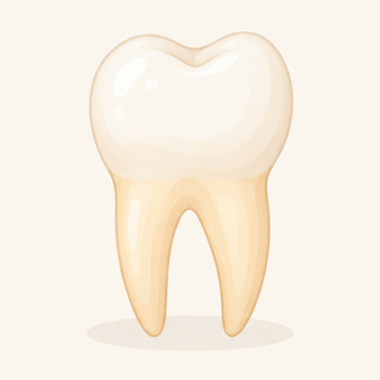
Look in a mirror at the color of your teeth, the spaces between them, and the edge of your gums. Early tooth decay often doesn’t hurt; the first clue is usually a dull, chalky white spot.
- Proper name
- Tooth Dens
- Count
- 20 baby teeth, 32 permanent teeth
- In short
- Don’t stop brushing if gums bleed; see a dentist
Which look most like your teeth and gums?Tap one to see what it means
See all 10 readings
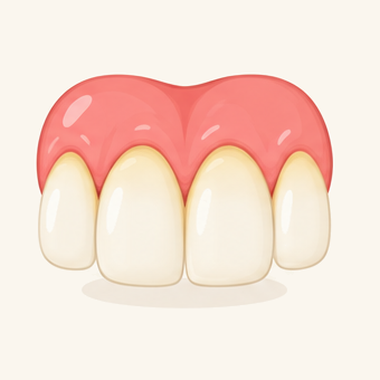
White with a yellow tint, pink gumsNormal
Healthy teeth range from white to yellowish-white, so a slight yellow tint is normal and varies from person to person. Gums look pink and firm, and don’t bleed when you brush.
Brush morning and night with fluoride toothpaste for at least 2 minutes each time, clean between your teeth once a day, and get a dental checkup once a year.
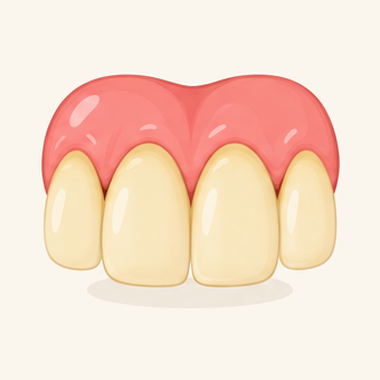
Yellowish overallMostly normal
The dentin underneath your enamel is naturally yellowish. As you get older, enamel wears thinner and lets more of that yellow show through. Natural tooth shades also vary from lighter to darker.
No treatment needed. If you want your teeth whiter, have a dentist check them first: teeth and gums must be healthy, and whitening isn’t done under age 18. Whitening toothpaste only scrubs off surface stains and can’t change your natural tooth color.
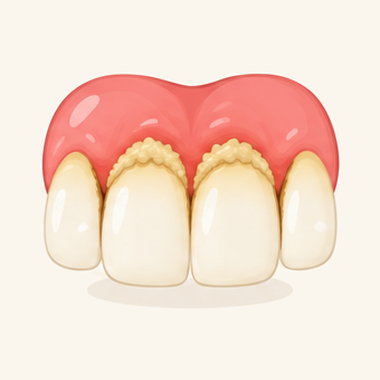
Stains or tartarTime for a cleaning
Tea, coffee, red wine, soy sauce and smoking leave yellow-brown stains on enamel, especially where plaque builds up. The hard yellow-white crust along the gumline is tartar: plaque that wasn’t brushed away starts hardening within days. Toothbrushes and floss can’t remove it, and it irritates gums so they swell and bleed easily.
See a dentist or hygienist for a cleaning. Scaling removes tartar, and polishing lifts most surface stains. Don’t scrape tartar off yourself, or you can damage your teeth and gums.
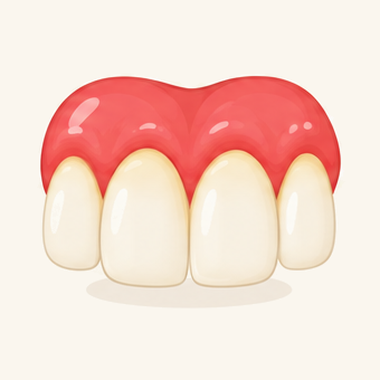
Red, swollen gumsGingivitis
Gums look red and puffy, and bleed when you brush, floss or bite into something firm like an apple. That’s gingivitis: plaque sitting along the gumline has inflamed the tissue. It often doesn’t hurt, so many people don’t realize they have it. At this stage it’s still completely reversible.
Don’t stop brushing because they bleed. Keep brushing thoroughly and cleaning between your teeth every day; switching to a soft-bristle brush while gums are sore can help. If they still bleed after several days of careful cleaning, see a dentist for an exam and cleaning.
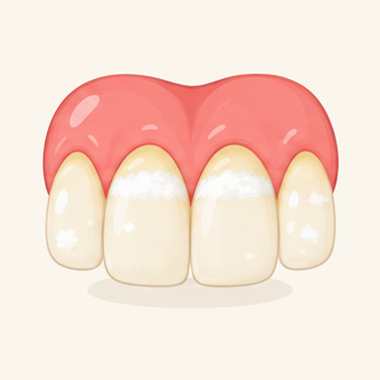
Chalky white spotsMay be early decay
Dull, chalky white patches can be the earliest sign of tooth decay: acid has dissolved minerals out of the enamel, though a cavity hasn’t formed yet. People with braces often get them around brackets. Getting too much fluoride in early childhood while teeth are still forming in the jaw can also leave fine white lines or patches, called fluorosis, which isn’t a disease.
Have a dentist tell which it is. Early decay can often be reversed with fluoride toothpaste and fluoride treatments, though established white spots may stay visible.
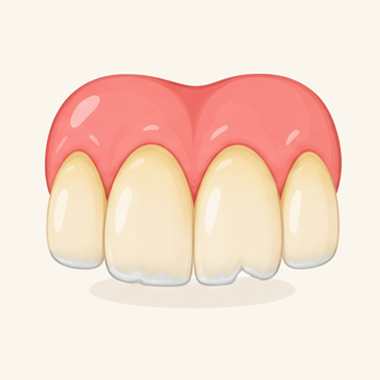
Thin, translucent edgesPossible acid erosion
The biting edges of front teeth turn thin, see-through, rough or slightly chipped, teeth look yellower, and hot or cold foods trigger a sharp zing. Acid is dissolving the enamel away, from frequent soda (even sugar-free), fruit juice, acid reflux or vomiting. Dissolved enamel doesn’t grow back.
See a dentist, and track down where the acid is coming from; treat frequent reflux. Have acidic drinks with meals, and try a straw. After anything acidic, rinse with plain water and wait 30 to 60 minutes before brushing.
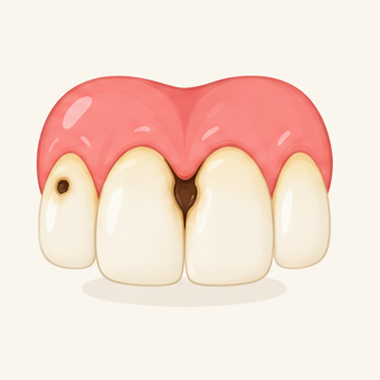
Dark spots or a holePossible cavity
Brown or black spots on a tooth or between teeth, or a visible pit or hole, often with twinges from cold, hot or sweet foods, or pain when biting. Decay in the outer enamel doesn’t hurt; pain usually starts once it reaches the dentin underneath, so no pain doesn’t mean no problem.
See a dentist soon. Once there’s a cavity, it usually needs a filling. Left alone, decay keeps tunneling deeper until it reaches the pulp and requires a root canal.
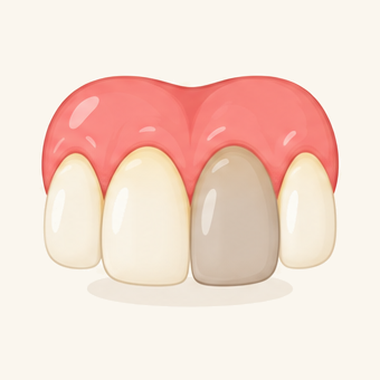
One gray toothPulp may be injured
A single tooth looking darker, gray or brownish compared with the teeth next to it is common after an old bump or knock. The pulp inside may have been bruised or even died, and a tooth with dead pulp may stop feeling hot or cold. The color change can show up soon after the injury or years later.
See a dentist instead of waiting it out. A gray tint doesn’t prove the nerve has died; an exam is needed to check. If the pulp is dead, it needs to be cleared out with a root canal.
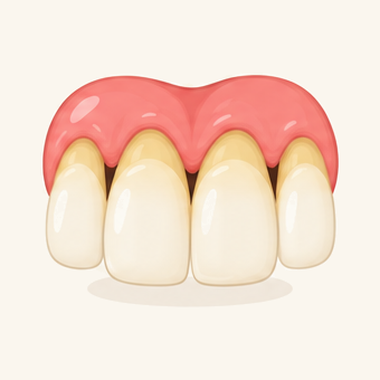
Receding gums, wider gapsPossible gum disease
Gums pull back so teeth look longer, yellowish roots show, dark triangles open between teeth, and teeth may turn sensitive, lose stability or come with lingering bad breath. Most often, untreated gingivitis has progressed to periodontitis, slowly breaking down the bone holding the teeth. Brushing too hard or using a hard-bristle brush can also wear gums back.
See a dentist. Gums that have pulled back and bone that has been lost won’t grow back, but treatment can stop it from getting worse. Switch to a soft brush and a gentler hand. If a tooth feels loose or falls out, get seen soon.
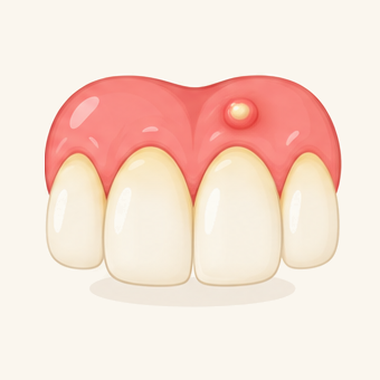
A pimple-like bump on the gumPossible dental abscess
A swollen bump on the gum with a yellowish or white center, looking like a pimple, often with pain and a bad taste in your mouth. Pus has collected from an infection inside the tooth or gum. It won’t clear on its own; even if it bursts and stops hurting, the infection is still there.
See a dentist urgently, and don’t squeeze or pop it. If swelling in your mouth or neck makes it hard to breathe, speak or swallow, or your eye is swollen or you can’t open your mouth, go to the ER right away.
Lighting and angle change how white or yellow teeth look. What counts is a lasting change, along with pain, swelling or bleeding.
When to see a dentist
- A toothache lasts longer than 2 days, or pain relievers don’t settle it
- Cold, hot or sweet foods trigger a sharp twinge
- Your gums bleed when you brush
- You notice chalky white spots, brown or black marks, or a small hole on a tooth
- It’s been over a year since your last dental checkup, or over 6 months for a child
- Signs of a dental abscess: a pimple-like bump on the gum, severe toothache, swelling in your face, cheek or jaw, a bad taste in your mouth, or a fever
- Pain that keeps you from sleeping or getting through the day and doesn’t respond to painkillers, or painkillers help but the ache keeps coming back
- Very painful, swollen gums, or a tooth that feels loose or fell out
- A lump, red patch or white patch inside your mouth that keeps growing or hasn’t gone away, even if it doesn’t hurt
- A tooth that’s knocked out, broken or loosened; if an adult tooth is knocked out, aim to see a dentist within 1 hour and follow the steps below right away
- Severe swelling in your mouth, lips, throat or neck that makes it hard to breathe, speak or swallow
- A toothache along with swelling around your eye or in your neck
- A swollen, painful eye that’s hard to open, or sudden trouble with your vision
- Severe swelling inside your mouth, or you can’t open your jaw
- Heavy bleeding from your mouth that won’t stop
- A serious injury to your face or jaw, or passing out, vomiting or seeing double after a blow to the head or face
If your face is swollen or you have a fever and you can’t reach a dentist right away, go straight to the ER. If a dental abscess bursts, the pain may suddenly ease, but the infection is still there and still needs dental treatment.
Layers of a tooth
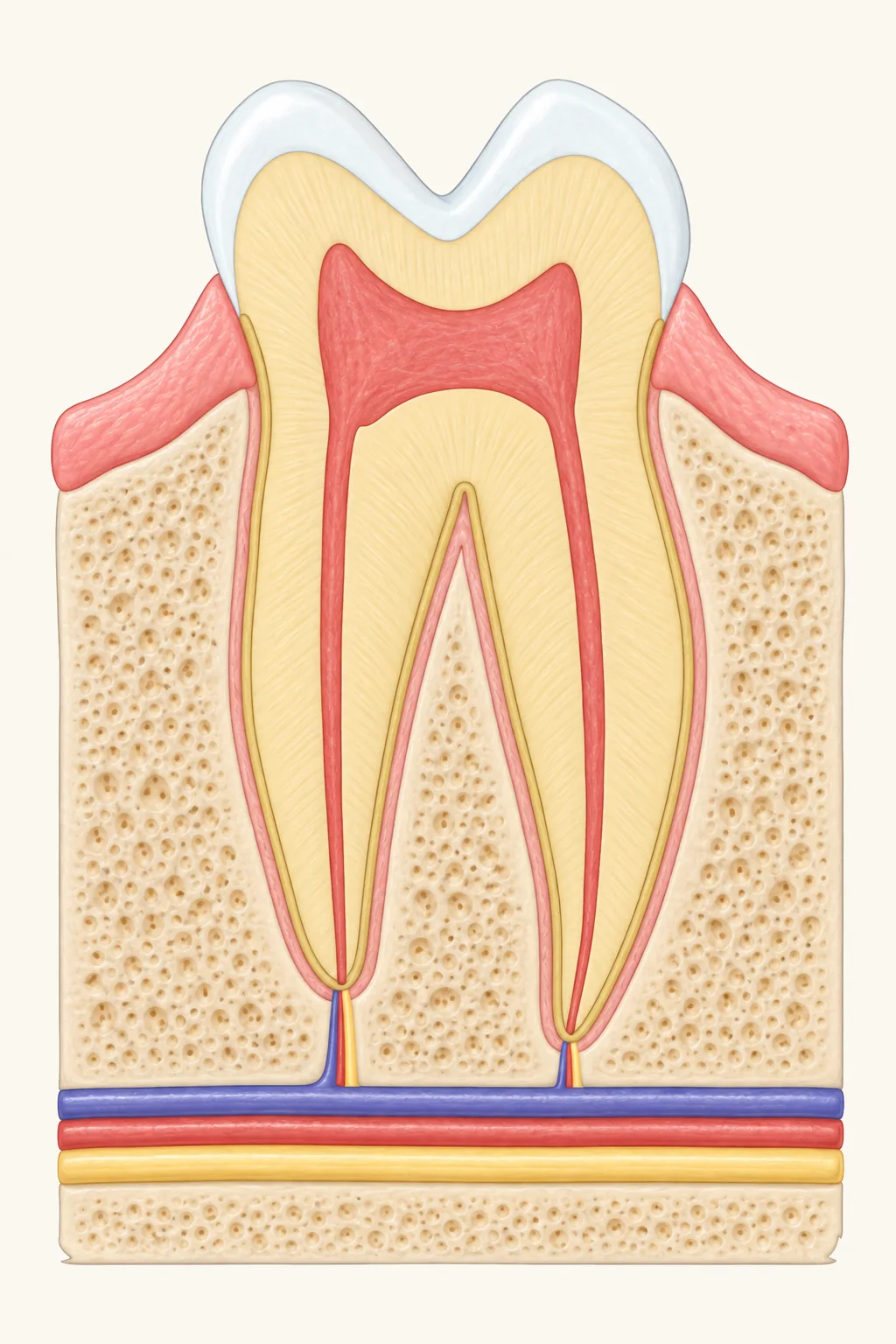
boneCemen-
tumPeriodontal
ligamentNerve and blood vesselsRoot tip
The part you can see above the gum is the crown, and the part anchored in the jawbone is the root. The crown is covered in enamel, the hardest substance in the body. Under enamel lies bonelike dentin, which makes up most of the tooth. At the center sits the pulp, carrying nerves and blood vessels down through the roots in narrow root canals.
Around the root is a thin layer called cementum, held into a socket in the jawbone by the periodontal ligament. Pink gums cover the bone and hug the neck of each tooth.
Once enamel decays into a cavity, erodes from acid or wears away, it can’t grow back. Only early demineralization, while the surface is still intact, can repair itself with minerals from saliva and fluoride.
- 20Baby teeth. Most babies get their first tooth around 6 months, though it can be under 4 months or past 1 year. All 20 are usually in by age 2 to 3.
- 32Permanent teeth. Roughly between ages 6 and 12, baby teeth fall out and give way to adult teeth: 8 incisors, 4 canines, 8 premolars and 12 molars.
- 4Wisdom teeth. The back-most molars in each corner, usually coming in between the late teens and early 20s. When there isn’t room and another tooth blocks them, they’re called impacted wisdom teeth.
How tooth decay moves inward, layer by layer
A sticky film of bacteria called plaque clings to teeth. The bacteria feed on sugars and make acids that slowly dissolve tooth structure. What matters most isn’t only how much sugar you eat, but how often you have it and how long it stays on your teeth. As you read down the steps, the matching layer lights up on the diagram.
boneCemen-
tumPeriodontal
ligamentRoot tip
- Enamel only: chalky white spot, no pain
Acid first pulls minerals out of the enamel, leaving a dull white spot on the surface. Nothing usually hurts yet. This stage can still reverse: a dentist can prescribe high-fluoride toothpaste or rinses, or apply fluoride varnish, to help the enamel reharden.
- Into dentin: a cavity forms
Once acid breaks through the enamel, a brown or black spot appears and becomes a hole. Cold, hot or sweet food and drink may send a sharp twinge. A hole can’t fill itself back in; it usually needs a filling.
- Into the pulp: severe pain
Bacteria reach the pulp in the center of the tooth, triggering inflammation, infection and often severe toothache. Treatment means a root canal: drilling an opening, clearing out the infected pulp, cleaning and sealing the canal inside, and often placing a crown. Without treatment, the tooth may have to come out.
- Out the root tip: dental abscess
Infection travels out the end of the root and pools as pus inside the bone. That’s a dental abscess, bringing throbbing pain, a pimple-like bump on the gum and sometimes facial swelling. It won’t heal on its own, so see a dentist urgently; if swelling spreads around your eye or makes it hard to breathe or swallow, go to the ER immediately.
- Another path: from the gums downward
Plaque sitting along the gumline irritates the gums first: they turn red, puffy and bleed easily. That’s gingivitis, and it’s still completely reversible. Left alone, it can turn into periodontitis, slowly destroying the periodontal ligament and the jawbone supporting the tooth. Gums recede, gaps widen, teeth loosen and eventually fall out. That deeper damage doesn’t grow back, though treatment can stop it in its tracks. Periodontitis is often painless too, yet it’s a leading cause of tooth loss in adults.
Cavities and gum disease are among the most common conditions worldwide. Globally, oral diseases affect about 3.5 billion people: roughly 2 billion have untreated decay in permanent teeth, and 514 million children have decay in baby teeth. In the US, more than half of children ages 6 to 8 have had a cavity in a baby tooth, about 1 in 5 adults ages 20 to 64 has untreated tooth decay, and more than 4 in 10 adults 30 and older have some form of gum disease, rising to about 60% by age 65.
How to brush so it actually helps
Most cavities and early gum disease can be prevented with daily habits that don’t take much time: clearing away plaque gently and letting fluoride sit on the teeth.
- Twice dailyBrush at least twice a day for at least 2 minutes each time. Right before bed is the one not to skip, and don’t eat afterward.
- FluorideUse fluoride toothpaste, the best-proven and safest way to prevent cavities. Adults should choose a paste with at least 1,350 ppm fluoride (0.135% on tubes that list a percentage; standard adult toothpastes run 1,000 to 1,500 ppm). If your local drinking water has high natural fluoride, ask a local dentist.
- Don’t rinseSpit out the foam when you finish, and don’t rinse right away with water or mouthwash, or you’ll wash away the protective fluoride left on your teeth.
- Between teethClean between your teeth once a day with floss or interdental brushes. If you have wider spaces, interdental brushes often work better. Skip wooden toothpicks, which easily hurt your gums.
- Sweet foodsCut back on sugary foods and drinks, and especially on how often you have them: sipping a sweet drink all day harms teeth far more than having it once with a meal. Whole fruit and plain milk rarely cause cavities.
- New brushReplace your toothbrush roughly every 3 months (or 3 to 4 months, once the bristles fray).
- CheckupsEven if nothing hurts, get a dental checkup at least once a year; children’s decay moves faster, so take them every 6 months. Most people benefit from a professional cleaning once or twice a year.
How much toothpaste for kids
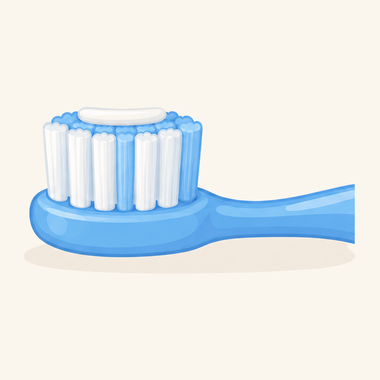
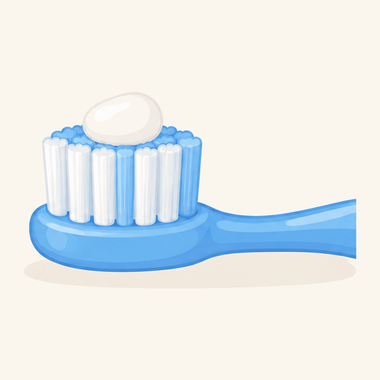
Electric or manual? Both clean equally well as long as you reach every surface and use fluoride toothpaste, though some people find an electric brush makes it easier to do a thorough job. Pooling years of clinical trials shows powered brushes reduce plaque slightly more over the long term (about 21% more) and reduce gingivitis slightly more (about 11%), though it isn’t yet clear how much real-world difference that small margin makes to keeping teeth.
Dental sealants and fluoride varnish. The chewing surfaces of back molars have deep pits and grooves where decay starts easily. Painting a thin protective coating over those grooves, called a dental sealant, is one of the best ways to stop molar cavities: sealants prevent 80% of back-tooth cavities for 2 years and continue protecting against 50% for up to 4 years. Dentists usually place them on first permanent molars between ages 6 and 9 (around age 6, the “six-year molars”) and second permanent molars around ages 12 to 13, yet about 60% of US children ages 6 to 11 still lack them. Children ages 3 to 6 (and starting when the first baby tooth erupts under US pediatric guidelines) can also get fluoride varnish every 6 months, and many schools offer free sealant programs.
Common myths
- My gums bleed when I brush, so I should stop brushing themThe opposite is true. Bleeding gums usually mean gingivitis; if you stop brushing, more plaque piles up and the inflammation gets worse. Keep brushing and cleaning between your teeth every day, switching to a soft-bristle brush if your gums feel sore. If bleeding doesn’t settle after a few days of careful cleaning, see a dentist.
- Whiter teeth mean healthier teethHealthy teeth naturally range from white to yellowish-white; snow-white teeth are rare. If you want whitening, have a dentist check your mouth first: teeth and gums must be healthy, and whitening isn’t done under age 18. Salon treatments and online kits give poor results and can burn gums or damage teeth. Whitening toothpastes only polish off surface stains and can’t change your natural tooth color.
- Dental cleanings loosen teeth and make gaps widerWhat actually makes gums recede is tartar sitting in those spaces year after year. When a cleaning removes the tartar, the widened gaps that were packed with buildup suddenly show, making it look like the cleaning created them. Teeth can also feel briefly sensitive to hot and cold because freshly uncovered surfaces were shielded under tartar; stick to lukewarm water and mild temperatures for a few days. Skipping cleanings lets gums recede further and jawbone keep eroding until teeth truly loosen. People who brush thoroughly and clean between teeth every day usually need a cleaning every 6 to 12 months; people with heavy staining or crowded teeth may need one every 3 to 6 months.
- Wisdom teeth always have to come outNot necessarily. Impacted wisdom teeth that aren’t causing pain or disease generally don’t need preventive removal; a dentist can simply keep an eye on them at routine checkups. Extraction makes sense when they cause repeated gum infections, decay or cysts.
- Baby teeth fall out anyway, so cavities in them don’t matterBaby teeth can still decay into deep holes, get infected and form abscesses, and decay spreads fast in children. Treating baby teeth early protects the permanent teeth developing underneath. A child’s first dental visit should happen after the first tooth appears or before age 1, then every 6 months after that.
If a tooth gets knocked out
- CheckDon’t put a baby tooth back inPushing a baby tooth back into the socket can harm the permanent tooth forming underneath, or risk the child inhaling it. Still take your child to see a dentist.
- CrownHold the white crown, never touch the rootLiving cells coat the root surface, and whether the tooth can reattach depends mainly on keeping them alive.
- RinseIf it’s dirty, rinse gently with milkRinse briefly with milk, sterile saline or your own saliva. Never scrub, wipe or dry it.
- ReplantPut it right back in its socketIf you can, gently push it back into place right away and bite down softly on a clean cloth or gauze to hold it steady. Replanting on the spot gives the tooth its best chance.
- StoreIf it won’t go back in, put it in milkIf you have no milk, spit some saliva into a cup and submerge the tooth in it. Never let it dry out or wrap it in a tissue. Plain water isn’t ideal, but if nothing else is available, it’s still better than letting it dry.
- DentistGet to a dentist right awayThe faster the better, ideally within 1 hour. Most cells on the root die within 30 minutes if the tooth stays dry; milk buys extra time. Even past an hour, a dentist will often still try to replant it. Go right away even if you can’t find the tooth.
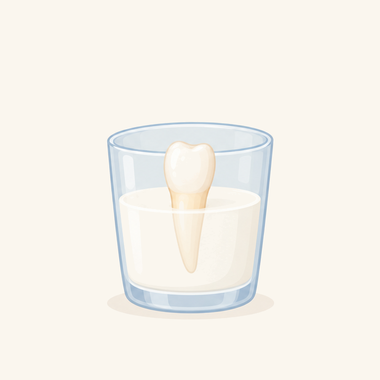
Keep a shelf-stable carton of UHT milk in your home or sports first-aid kit. When a tooth is knocked out, plain cow’s milk is the easiest reliable storage liquid to find fast.
If only a piece chipped off: find the broken piece, keep it wet in milk or water so it doesn’t dry out, and bring it to a dentist; sometimes it can be bonded back on.
What teeth and gums tell you about the rest of the body
Some changes on your teeth or gums don’t start in your mouth.
- Acid erosion: reflux and vomitingFrequent acid reflux or repeated vomiting washes acid up from the stomach over your teeth again and again, leaving them thinner, yellower and sensitive to hot and cold. Nighttime reflux is hardest on enamel because saliva flow and swallowing drop while you sleep. After throwing up, rinse with plain water and wait before brushing; treat frequent reflux to protect your teeth.Esophagus and reflux →
- Bleeding gums: medications and bloodFor people taking blood thinners such as apixaban or rivaroxaban, bleeding gums when brushing is a common side effect. If your gums bleed along with frequent nosebleeds, easy bruising or unusually heavy periods, get your blood checked.Why some people bruise easily →
- Gum disease and diabetesThe two feed each other: people with diabetes develop gum disease more easily and more quickly, while active gum disease makes blood sugar harder to control. Regular dental care matters especially during pregnancy and for anyone with type 2 diabetes.Pancreas and diabetes →
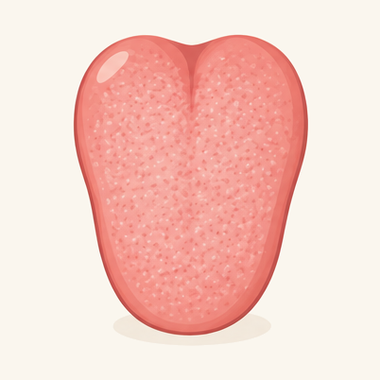 Mouth sores, patches and lumpsAny lump, red patch or white patch in your mouth that keeps growing or won’t clear up, or a mouth ulcer lasting longer than 3 weeks, should be checked by a dentist or doctor. Dentists look for these as part of a routine dental exam too.Tongue and mouth →