 Know Thy Body
Field guide/Organs · Breathing & circulation
Know your heart
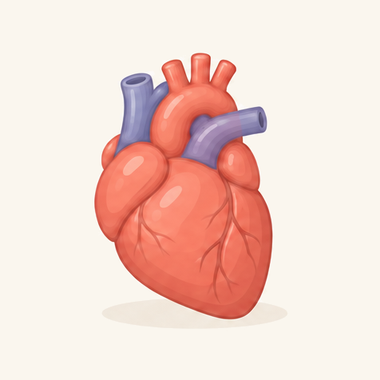
Your heart sits right in the center of your chest behind the breastbone, only tilting slightly to the left. It beats roughly 100,000 times a day: the right side sends oxygen-poor blood to your lungs to pick up oxygen, and the left side pumps that fresh blood out to the rest of your body.
- Proper name
- Heart Cor
- Where
- Center chest, slightly left
- Size
- About a fist, 9–12 oz (250–350 g)
- Heart rate
- 60–100 beats/min in adults at rest
Where it sits and what’s around it
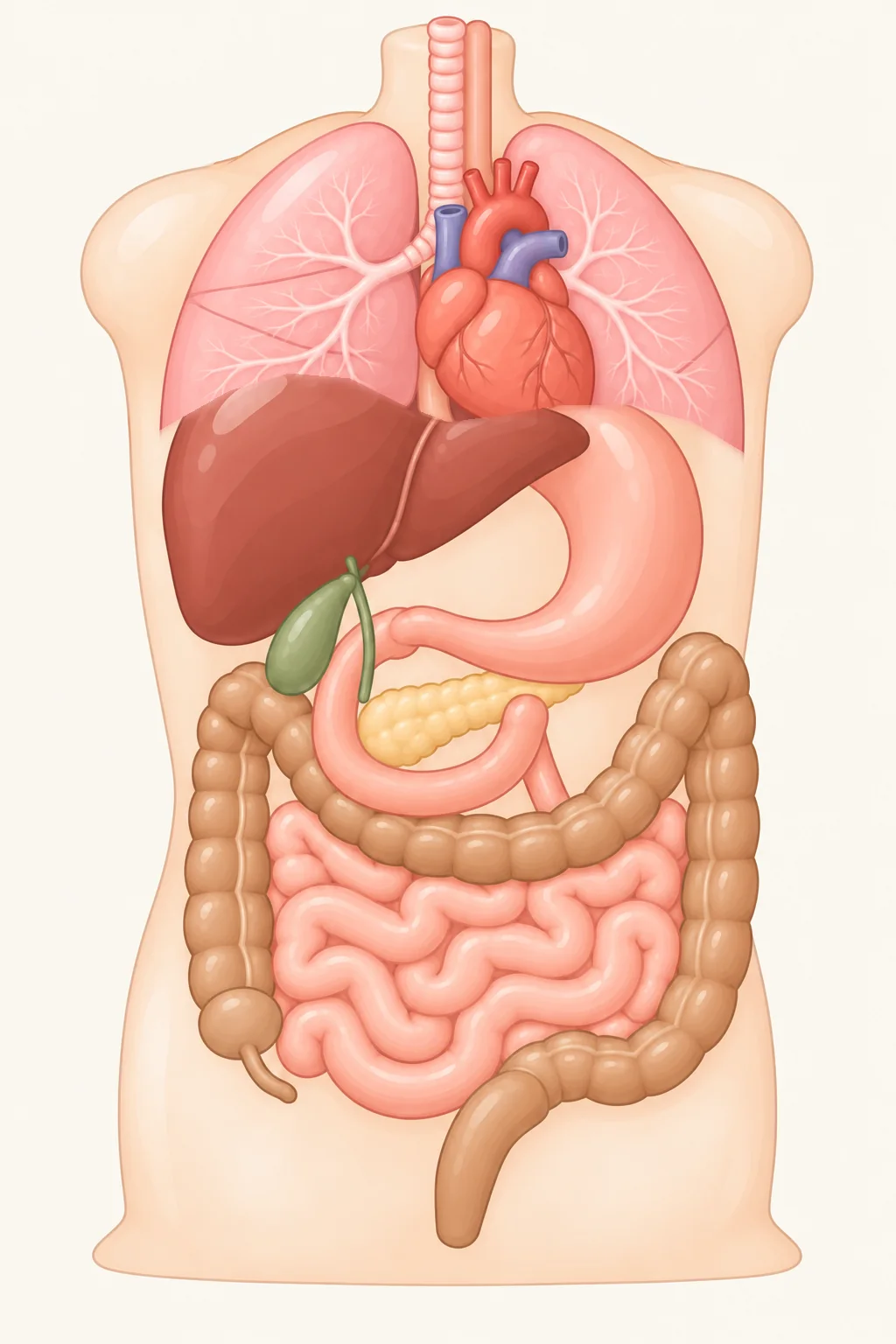
Lit in terracotta: the heart tucked behind the breastbone between the two lungs. Tap any organ to view its page.
Your heart sits tucked between your right and left lungs. Just behind it runs the esophagus, and directly underneath sits the diaphragm—so pain from the bottom wall of the heart can feel a lot like upper stomach trouble, just as severe heartburn can mimic chest pain.
Out of the top emerge the great blood vessels: the aorta sending fresh blood everywhere, the pulmonary arteries carrying used blood to the lungs, and the large veins returning blood from head, arms, and belly. Right below the diaphragm sit the liver and stomach.
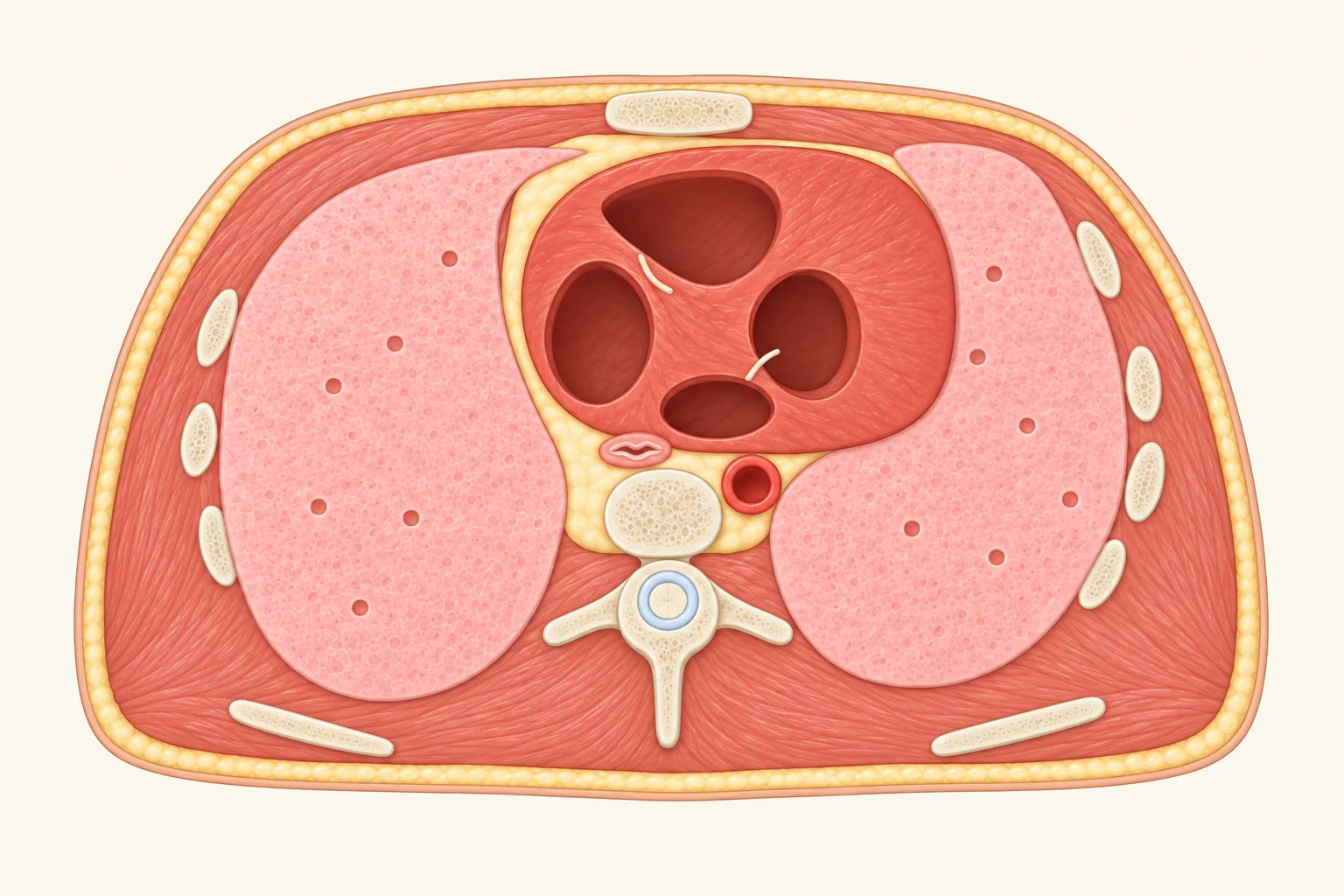
vertebraFront · chestBackRL
What it does
- The right side pumps to the lungsBlood returning from the body is low in oxygen. It enters the right upper chamber (atrium), drops into the right lower chamber (ventricle), and gets pushed into the lungs to trade carbon dioxide for oxygen.
- The left side pumps to the whole bodyOxygen-rich blood returns from the lungs into the left atrium, drops into the thick-walled left ventricle, and shoots into the aorta to feed your brain, kidneys, muscles, gut, and limbs.
- Keeps its own electrical rhythmAn internal pacemaker sends an electrical signal down the heart muscle on every beat. Most adults rest at 60–100 beats a minute—around 100,000 beats and roughly 1–2 gal (4–8 L) pumped every minute at rest, surging far higher during exercise. Four one-way valves snap shut between beats to keep blood moving forward, creating the familiar lub-dub.
- Feeds its own muscleBlood inside the chambers doesn’t soak directly into the thick muscle wall. Instead, coronary arteries branch right off the base of the aorta and wrap the outside of the heart. When plaque or a clot narrows or plugs one of those blood vessels, chest pain (angina) or a heart attack follows.
Clues it sends out
When your heart struggles to pump, keep rhythm, or feed its own muscle, distant parts of your body often speak up first.
- Pink, frothy sputumCoughing up pink, bubbly mucus can mean acute pulmonary edema—fluid backing up into the lungs because the left side of the heart isn’t pumping forward fast enough. With trouble breathing, call an ambulance (911 in the US and Canada, 999 in the UK, 112 in the EU) right away; even with no breathlessness, see a doctor the same day.Match phlegm colors →
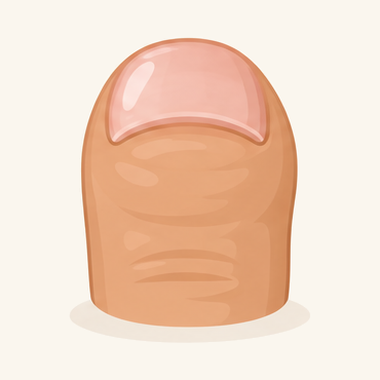 Finger clubbingRounded, bulging fingertips with downward-curving nails can point to chronic lung disease, liver or gut trouble, or—on the heart side—congenital heart disease or infective endocarditis. New clubbing needs a medical check.Check nail clues →
 Swollen ankles and gasping when lying flatWhen the heart slows down, fluid pools in your feet, ankles, shins, and belly—pressing leaves a dent, and your weight jumps over days. Fluid in the lungs forces people to prop up extra pillows at night or wake coughing. Ankle swelling can also stem from standing or sitting long hours, high salt intake, or kidney or liver trouble. Breathless when lying flat or doing everyday tasks needs urgent care; swelling paired with shortness of breath, chest tightness, or coughing blood means call an ambulance.Foamy urine + swelling →
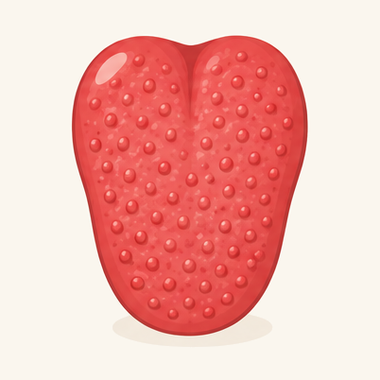 Child with high fever and a “strawberry” tongueA child under 5 with a high fever lasting 5 days or more alongside bloodshot eyes, cracked lips, and a bright red, bumpy tongue could have Kawasaki disease, which inflames blood vessels—including the coronary arteries feeding the heart. Early treatment usually prevents lasting heart damage. Seek urgent medical care right away.Check tongue clues →
 Easy bruising or bleeding on blood thinnersConditions like atrial fibrillation or a mechanical heart valve often require anticoagulants (blood thinners) to prevent clots. Unexpected large bruises, nosebleeds that linger, pink urine, or dark stools mean your dose or bleeding risk needs a check. Don’t stop your medication on your own—call your doctor or clinic; heavy bleeding that won’t stop belongs in the ER.Easy bruising clues →
Is your heart on the left?
- Center chest, angled slightly leftYour heart sits directly behind your breastbone in the middle of the chest; roughly two-thirds lies slightly left of the midline, with its bottom tip pointing down and left.
- A heart attack isn’t always crushing chest painSometimes it feels like heavy pressure, squeezing, fullness, or stubborn indigestion, and it can come and go slowly. Chest discomfort is still the most common warning sign in both men and women, though women are somewhat more likely to also notice shortness of breath, nausea or vomiting, cold sweats, or pain in the back, neck, or jaw.
- Younger adults aren’t immuneRisk climbs steeply with age, but heart attacks still strike younger adults—especially with smoking, high blood pressure, high cholesterol, diabetes, extra weight, or a parent or sibling who had early heart disease (before 60).
- A “skipped beat” is usually harmlessA sudden flutter, thump, or pause is often a premature (ectopic) beat. Almost everyone gets them now and then—triggered by poor sleep, coffee, alcohol, stress, or decongestants—and occasional extra beats rarely mean danger. Still, see a doctor if they keep coming back or come with chest pain, dizziness, or breathlessness.
- Heart attack and cardiac arrest aren’t the sameA heart attack is a plumbing problem: a coronary artery gets blocked, starving heart muscle of blood while the person is usually awake and breathing. Cardiac arrest is an electrical malfunction: the heart stops pumping abruptly, the person collapses and stops breathing normally, and seconds matter—start CPR and grab an AED.
Common conditions
- High blood pressure (hypertension)High pressure forces your heart to push harder on every beat and wears down arteries quietly over years—usually with zero symptoms until damage builds up. US guidelines define hypertension starting at 130/80 mm Hg (nearly half of US adults have readings that high or take medication, with only about 1 in 4 under control), while many UK and international clinics diagnose it at 140/90 mm Hg in the office (or 135/85 mm Hg at home).
- Coronary artery disease and anginaFatty plaque narrows the heart’s own supply arteries. During exertion or stress, tight chest pain or squeezing (angina) kicks in and usually fades within 10 minutes of rest or prescribed nitroglycerin. When pain hits at rest, gets stronger, or lasts longer, get checked urgently.
- Heart failureDoesn’t mean the heart stopped—it means the pump can’t keep up with what your body needs. Fluid backs up into the lungs (shortness of breath, coughing when flat) and legs (ankle swelling, rapid weight gain from retained water).
- Atrial fibrillation and rhythm problemsThe upper chambers quiver out of sync instead of squeezing cleanly. Blood can pool and clot inside the atrium, then travel to the brain and trigger a stroke; an irregular or racing pulse needs an ECG check.
- Valve diseaseOne or more of the heart’s four one-way valves stiffens (won’t open wide) or leaks (lets blood slip backward), forcing the muscle to overwork. An echocardiogram—an ultrasound of the beating heart—checks how valves move.
- Rheumatic and congenital heart diseaseUntreated strep throat in childhood can scar heart valves years later (rheumatic heart disease), while some people are born with structural differences in heart walls or valves.
When to see a doctor
- Palpitations that keep coming back, grow more frequent, or last more than a few minutes—or if you or a close relative have heart disease
- Swelling in both ankles or legs that doesn’t improve after a few days of home care or gets worse
- Fainting once and recovering right away, with none of the emergency warning signs below
- New finger clubbing
- Age over 40 and you haven’t had your blood pressure checked in 5+ years
- New bouts of chest tightness or pressure that come and go, even if you feel fine right now
- Known angina turning heavier, more frequent, lasting longer, or happening at rest
- Shortness of breath when lying flat, during everyday chores, or noticeably worse than usual
- Coughing pink, frothy sputum, even without feeling breathless (see a doctor the same day)
- Sudden unexplained weight gain over a few days
- Palpitations that stopped now, if they came with chest pain, breathlessness, or near-fainting
- Ankle or leg swelling on one side only, or painful, sudden, red, or warm swelling
- Sudden chest pain, pressure, tightness, or burning that won’t quit—especially spreading to your arms, back, neck, jaw, or upper belly, or with sweating, nausea, dizziness, or breathlessness
- Known angina pain that doesn’t ease after a few minutes of rest and prescribed nitroglycerin
- Severe shortness of breath or trouble speaking
- Lips or skin turning pale, bluish, or gray
- Ongoing palpitations, or palpitations paired with chest pain, trouble breathing, or nearly passing out
- Fast or erratic heartbeat alongside sweating, nausea, dizziness, a severe headache, or sudden one-sided facial droop, arm weakness, vision trouble, or garbled speech (possible stroke)
- Swollen leg or ankle together with trouble breathing, chest pain, coughing blood, palpitations, dizziness, or cold sweats (possible clot in the lungs)
- Fainting where someone doesn’t wake within 1 minute, isn’t fully back to normal, fainted during exercise or while lying down, had chest pain or palpitations, convulsed, or took a bad fall
If someone collapses: unresponsive and not breathing normally—shout for help, have someone call an ambulance (or dial on speakerphone yourself), and start hard, fast chest compressions in the center of the chest at 100–120 beats a minute while someone else grabs an AED (automated external defibrillator). If you’re alone, don’t leave the person to search for an AED.
While waiting for the ambulance: sit down and rest. If aspirin is right at hand and the person isn’t allergic, the emergency dispatcher may tell you to chew a single adult dose (325 mg in the US, or 300 mg in the UK/Europe); don’t waste time hunting for pills if none are handy. Anyone prescribed nitroglycerin for angina can take it as directed.