 Know Thy Body
Field guide/Organs · Breathing & circulation
Know your lungs
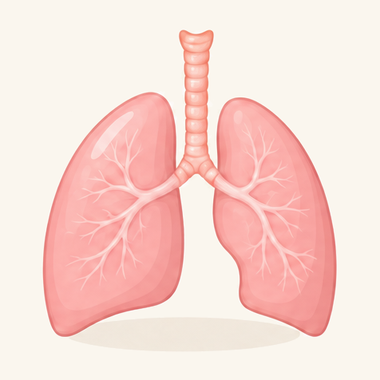
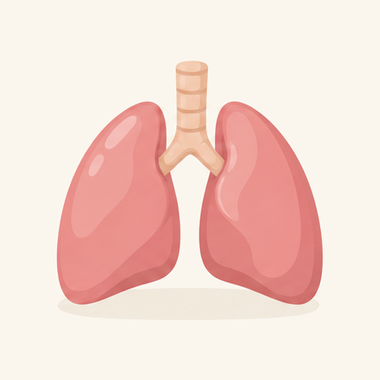
Your two lungs fill most of your chest, flanking the heart. Air travels down the windpipe and through branching airways until it reaches hundreds of millions of tiny air sacs where oxygen and carbon dioxide trade places. A thin layer of mucus lines that whole tree, and whatever gets coughed back up is phlegm.
- Proper name
- Lungs Pulmo
- Where
- Chest cavity, flanking the heart
- Lobes
- 3 on the right, 2 on the left
- Breathing
- 12–20 breaths a minute at rest
Where they are and how they’re built
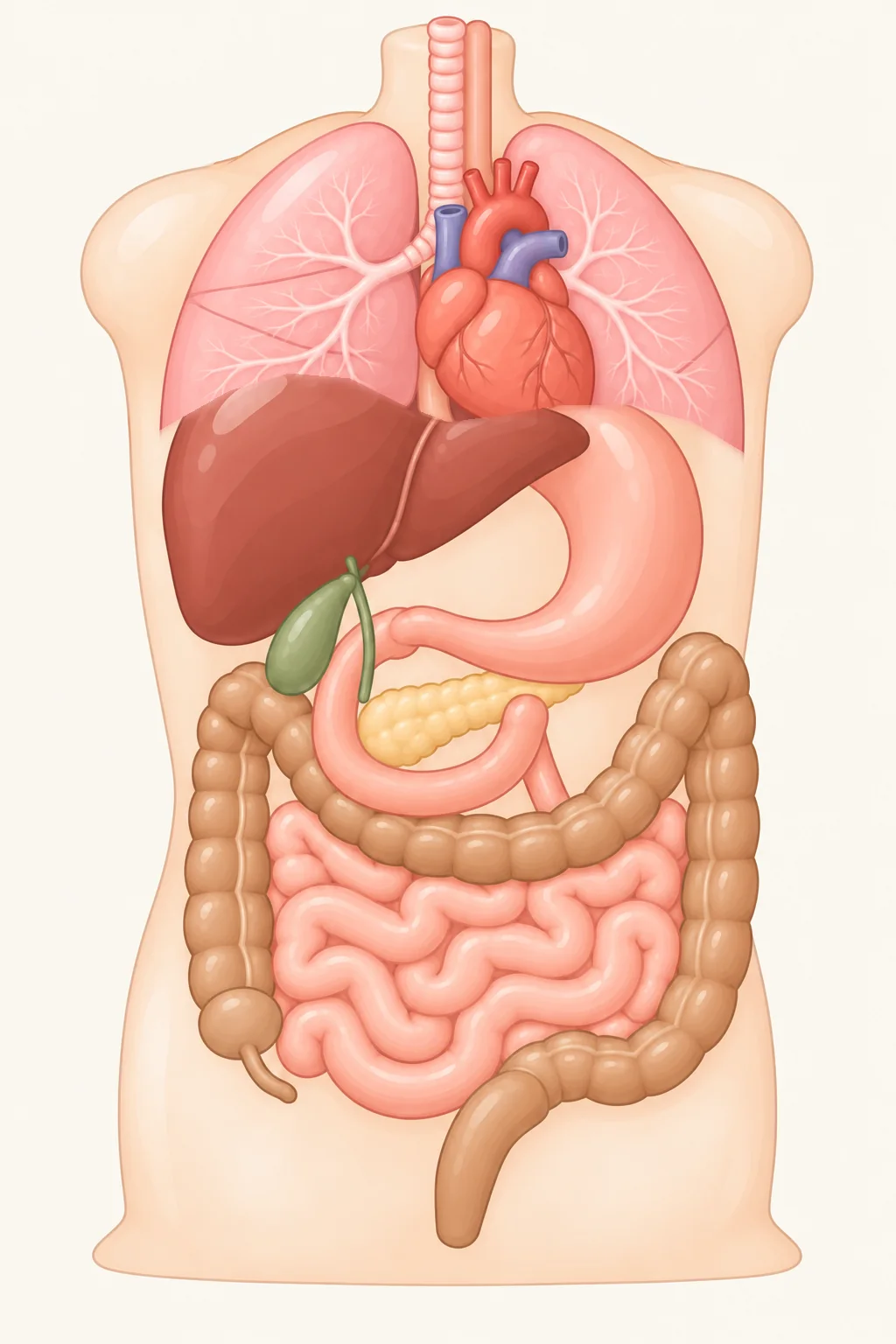
Lit in terracotta: the right and left lungs and the windpipe (trachea); the heart sits right between them. Tap any organ to view its page.
Your lungs aren’t mirror images. The right lung has three lobes; the left lung has two, tucked slightly narrower to make room for the heart sitting in the center-left chest.
Directly underneath lies the diaphragm, a thin dome of muscle dividing chest from belly. As it flattens downward, your lungs pull air in; as it relaxes upward, air flows back out. Down the midline runs the windpipe, sitting right in front of the esophagus, and higher up it connects to your nose and sinuses, where boogers start out.
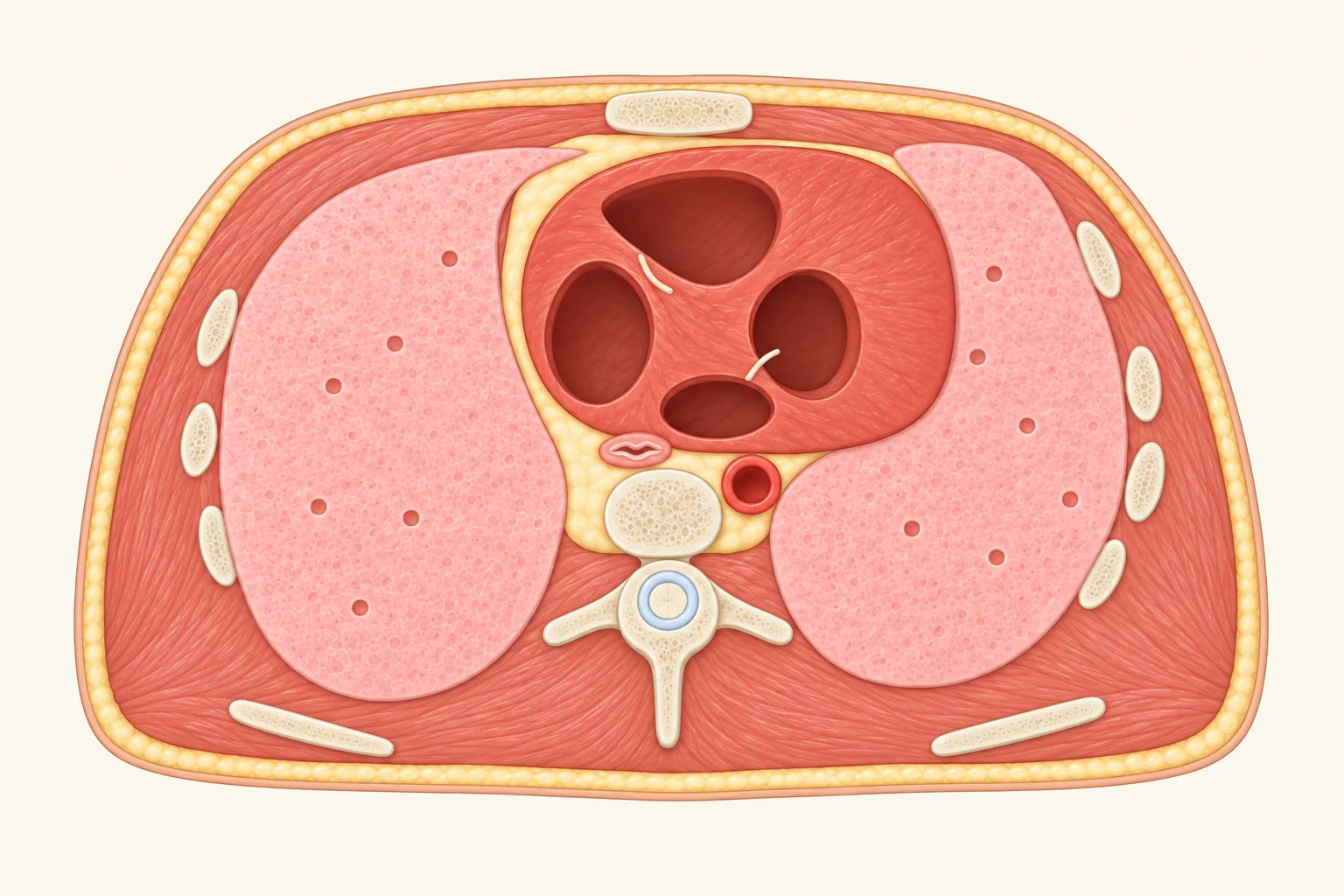
vertebraFront · chestBackRL
What they do
- Pull oxygen in, release carbon dioxideFrom the windpipe, airways branch roughly 23 times into finer and finer tubes until they end in about 480 million alveoli—microscopic air sacs. Each sac’s wall is only 0.6–1 micrometer thick (roughly 1/100th the width of a human hair) and wrapped in capillaries coming from the right side of the heart. Oxygen crosses into the blood here, while carbon dioxide crosses back out to be exhaled.
- Sweep out dust with mucus and ciliaYour airway lining makes roughly 1 fl oz (30 mL) of thin mucus every day to catch inhaled dust and microbes. Underneath sits a carpet of microscopic hairs called cilia that beat together like an escalator, pushing that mucus upward to the throat, where you swallow it without noticing. Most phlegm never gets coughed out at all.
- Trap and clear germsParticles smaller than about 3–5 micrometers can slip past your nose and throat down into the deep air sacs, where resident immune cells (macrophages) swallow and break them down.
- Power speech and coughingOutgoing air vibrates your vocal cords so your tongue and lips can shape words. When something irritates the airway or extra mucus builds up, a cough fires a sudden burst of air to clear the path.
Clues they leave behind
Your lungs are tucked behind your rib cage, but they send word whenever air or mucus meets resistance.
- Phlegm colorClear mucus is usually normal. White, yellow, or green phlegm shows up with ordinary colds and chest infections alike—the color comes from white blood cells, so it can’t tell a virus from bacteria on its own (viral infections don’t improve with antibiotics). If you have COPD or bronchiectasis, though, a color shift is worth reporting. Pink, frothy sputum points to fluid backing up into the lungs from the heart (pulmonary edema). Rust-colored or blood-tinged phlegm calls for urgent care; pink, frothy sputum with severe breathlessness means call an ambulance (911 in the US and Canada, 999 in the UK, 112 in the EU).Match phlegm colors →
- Coughing up blood or bloody streaksHard coughing fits and chest infections can burst tiny surface vessels and leave streaks. Tuberculosis, bronchiectasis, a blood clot in a lung vessel (pulmonary embolism), or lung cancer can also cause bleeding. A few dots or streaks need a same-day call to a doctor; larger amounts—or blood alongside shortness of breath, a racing heart, or chest or upper-back pain—require the ER.Phlegm warning signs →
 How long a cough lastsMost acute coughs clear on their own within 3–4 weeks. Still coughing past 3 weeks? See a doctor. A productive cough lasting 2 weeks or more alongside fevers, night sweats, weight loss, or known TB exposure also warrants checking for tuberculosis.When phlegm feels stuck →
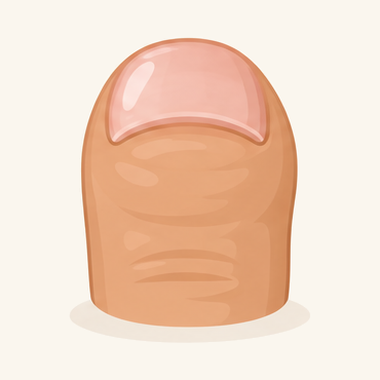 Thickened fingertips (clubbing)Fingertips widening and nails curving downward can be a quiet sign of chronic lung disease, including lung cancer, or long-term heart, liver, or gut trouble. If clubbing is new, have a doctor look.Check nail clues →
 Shortness of breath or wheezingFeeling winded can stem from asthma, a chest infection, carrying extra weight, smoking, or a panic attack. A whistling sound (wheeze) points to narrowed airways, as seen in asthma, COPD, and pneumonia. In severe low oxygen, the lips and tongue turn bluish or gray. Blue, gray, or pale lips, tongue, or skin—or sudden severe trouble breathing—call an ambulance right away.
Can you “cleanse” your lungs?
- Food and “detox” products can’t wash your lungsAnything you eat or drink travels down the esophagus into the stomach; inhaled air travels down the windpipe into the lungs. Detox teas, herbal pills, and “lung cleanse” supplements don’t enter your airways to scrub out tar or soot, and the American Lung Association warns against inhaling essential oils or unapproved vapor blends, which can irritate or injure lung tissue. Your lungs are built to clean themselves once exposure stops.
- Quit smoking, and lungs start clearing right awayWithin 48 hours of quitting, airways begin clearing backed-up mucus. Between 3 and 9 months, coughing and wheezing ease and lung function can climb by up to 10%. By 10 years without smoking, the risk of dying from lung cancer drops to roughly half that of someone who kept smoking.
- A mask only protects against fine smoke and dust if it sealsTiny airborne particles (PM2.5) slip deep into your air sacs, irritating tissue and raising the risk of COPD flares, heart events, and lung cancer over time. During wildfire smoke or heavy pollution, wear a well-fitted N95 (or FFP2/KN95) respirator with the nose wire pressed flat and no gaps along your cheeks; loose cloth or surgical masks let smoky air leak in around the edges. Anyone with severe COPD or asthma should check with their doctor before wearing a tight respirator.
Common conditions
- Chest infections and pneumoniaBronchitis inflames the larger airways; pneumonia fills the alveoli themselves with fluid and pus. Viruses trigger most acute bronchitis, which usually clears in 7–10 days (a dry cough can linger longer), while bacterial infections and pneumonia are more serious—especially at age 65 or older—and typically take 2–4 weeks to recover.
- AsthmaThe airway walls stay chronically inflamed and twitchy, narrowing when triggered by cold air, allergens, exercise, smoke, or infections and causing wheezing, coughing, and chest tightness. Preventer inhalers calm the underlying inflammation; rescue inhalers relax tight airways fast during a flare.
- COPD (emphysema and chronic bronchitis)Airways stay scarred and narrowed and air sacs gradually break down, trapping stale air so breathing takes extra work. Smoking causes most cases, though long-term dust, chemical fumes, and air pollution contribute too. Symptoms often develop slowly over years, and spirometry (a simple blowing test) confirms the diagnosis.
- Lung cancerEarly stages often cause zero symptoms. Clues include a cough that won’t quit, coughing up blood, shortness of breath, lingering chest pain, hoarseness, and unexplained weight loss. For adults aged 50–80 with a 20 pack-year smoking history who currently smoke or quit within the past 15 years, the USPSTF recommends annual low-dose CT screening.
- Tuberculosis (TB)A slow-growing bacterium usually settles in the lungs. Many people carry latent TB without feeling sick; active TB brings a cough lasting 2–3 weeks or more, fever, night sweats, weight loss, and sometimes bloody sputum.
- Pulmonary embolismA blood clot—often traveling from a deep vein in the leg—lodges in a lung artery and blocks blood flow. Risk climbs with recent surgery, cancer, estrogens, or sitting still for 4 hours or longer on a trip (see blood vessels). Sudden shortness of breath, sharp chest pain, a racing pulse, and coughing blood are emergency signs.
When to see a doctor
- A cough that lasts longer than 3 weeks
- A cough with phlegm for 2 weeks or more alongside fever, night sweats, weight loss, or TB exposure
- Getting noticeably more out of breath during everyday tasks
- Unexplained weight loss, persistent fatigue, or lingering fevers and night sweats
- Repeat or slow-to-clear chest infections, a hoarse voice that doesn’t clear, or new finger clubbing
- Age over 35, current or past smoker, with long-term shortness of breath and daily cough or phlegm
- Asthma that stops responding well, needing your rescue inhaler more often, or waking up short of breath at night
- A few dots or streaks of blood in your phlegm (call the same day)
- Noticeably harder work to breathe than usual
- Shortness of breath when lying flat (can signal heart failure)
- Hard, non-stop coughing or feeling severely unwell
- Chest pain when coughing or breathing alongside yellow-green phlegm (possible pneumonia)
- Pain or swelling in one leg
- Within 2 days after recovering from an asthma flare
- Severe trouble breathing, gasping, choking, or unable to speak full sentences
- Breathlessness with chest tightness or pressure, or pain spreading to an arm, back, neck, or jaw (possible heart attack)
- Lips, tongue, or skin turning pale, bluish, or gray
- Sudden confusion
- More than a few streaks of blood coughed up, or coughing blood with breathlessness, a racing pulse, or chest or upper-back pain
- Sudden shortness of breath, chest pain, racing heartbeat, or someone fainting
- Leg swelling alongside trouble breathing, chest tightness, or coughing blood (possible pulmonary embolism)
- Sudden severe breathlessness with pink, frothy sputum
- An asthma attack getting worse, not easing after maximum reliever puffs, or with no inhaler on hand
- A child who is limp or hard to wake, grunting to breathe, or pulling in under the ribs