 Know Thy Body
Field guide/Organs · Urinary system
Know your bladder
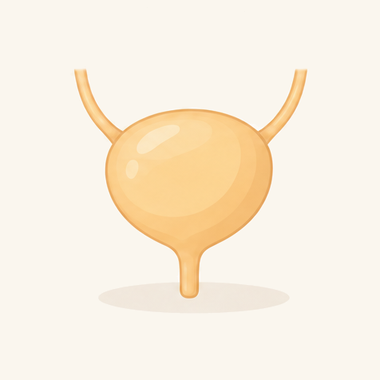
Your bladder is an expandable muscular pouch tucked down in your pelvis. Your kidneys make pee nonstop; the bladder stores it until roughly 7–12 ounces (200–350 mL) collect, then signals your brain it’s time to look for a bathroom. When you actually go is up to you.
- Proper name
- Vesica urinaria
- Where
- Pelvis, behind the pubic bone
- Capacity
- About 12–20 oz (350–600 mL)
- Urethra
- Female about 1.2–1.6 in (3–4 cm); male about 8 in (20 cm)
Where it sits
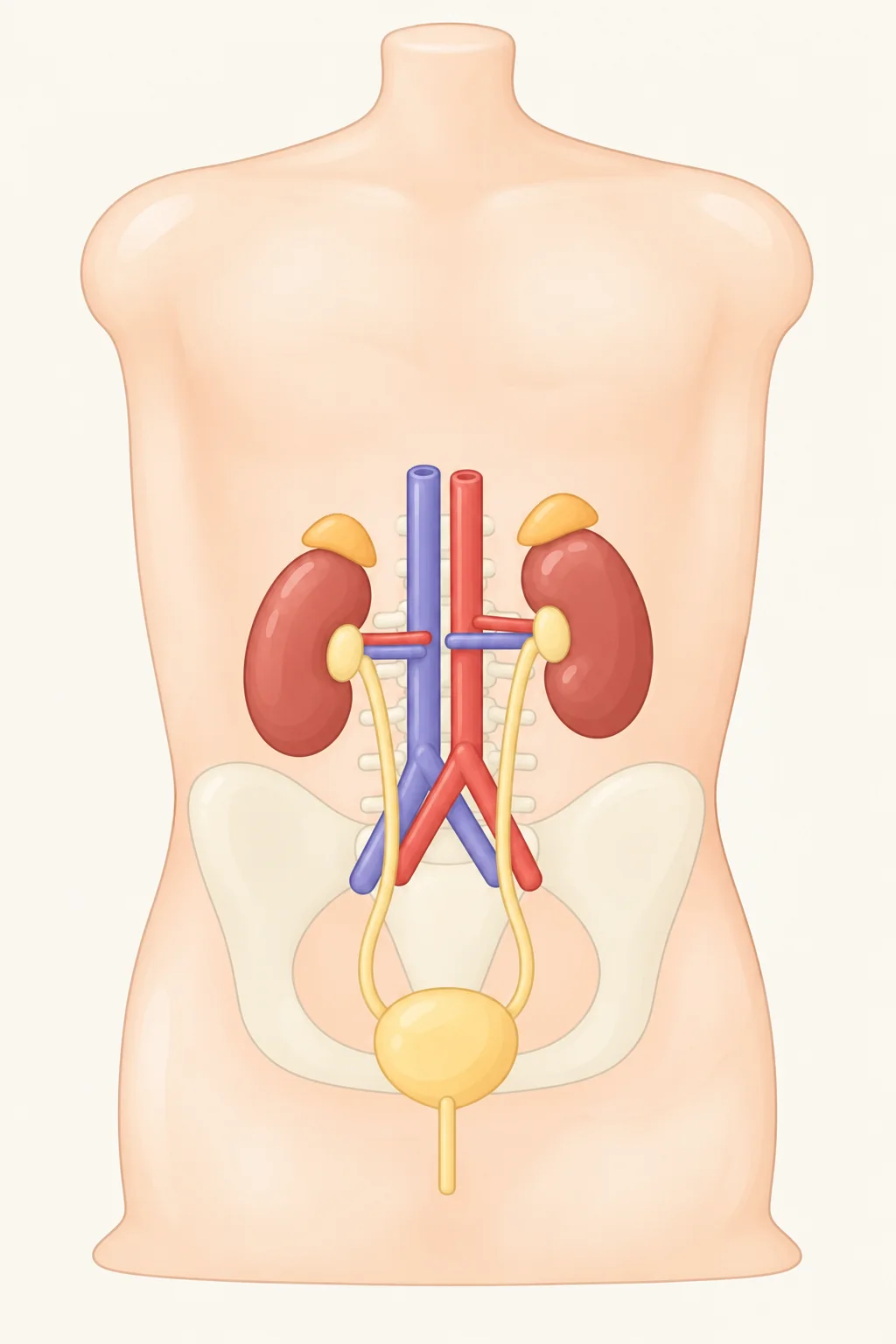
The bladder sits low in your pelvis right behind your pubic bone. In men, the rectum sits behind it; in women, the bladder sits in front of the uterus and vagina.
Two ureters bring pee down from the kidneys, entering through small flap-like openings so pee flows in without washing back up. At the bottom, the bladder empties into the urethra: in women it is only about 1.2–1.6 inches (3–4 cm) long and opens close to the anus, one reason bladder infections are far more common in women. In men it is about 8 inches (20 cm) long, passing right through the prostate first.
Male
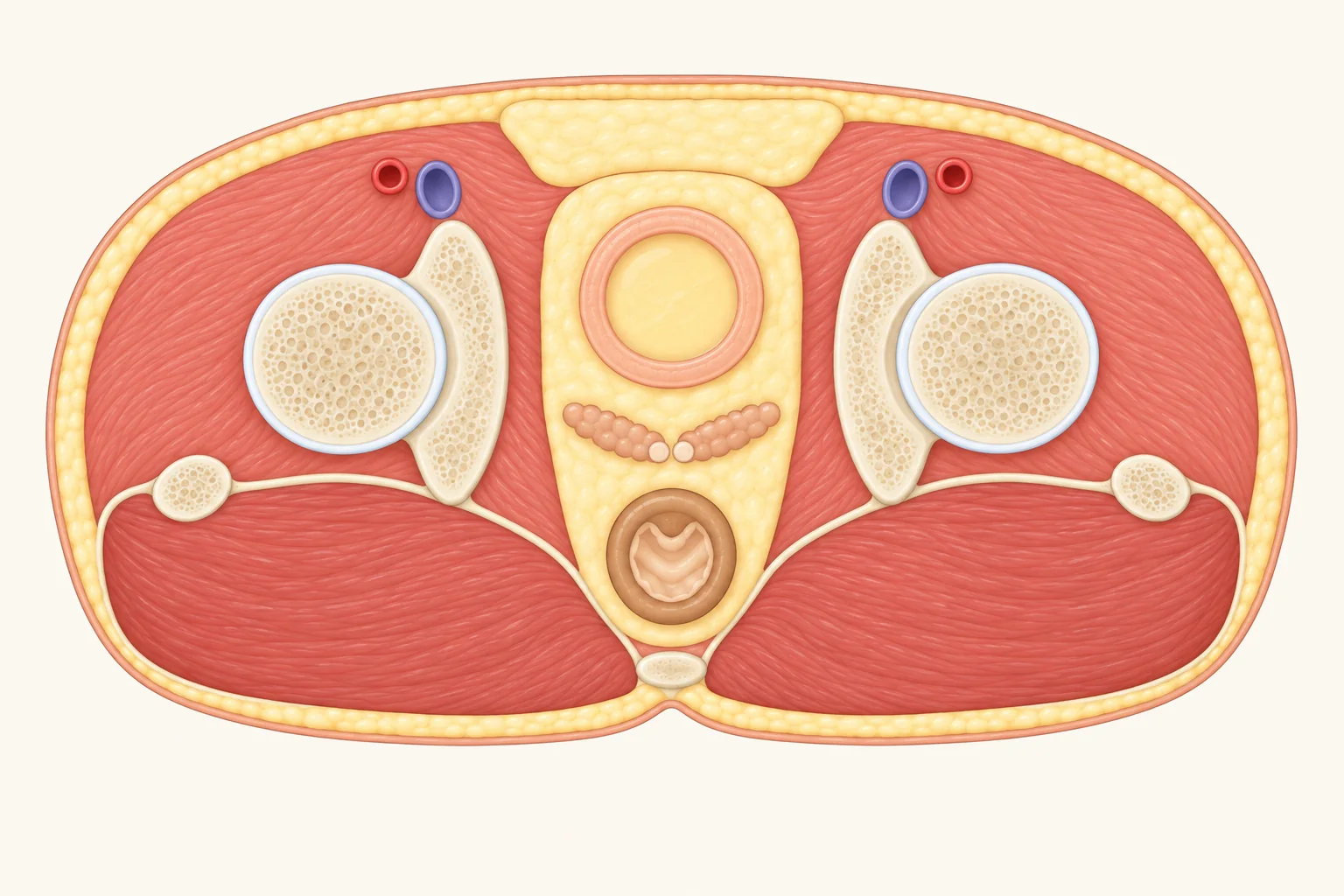
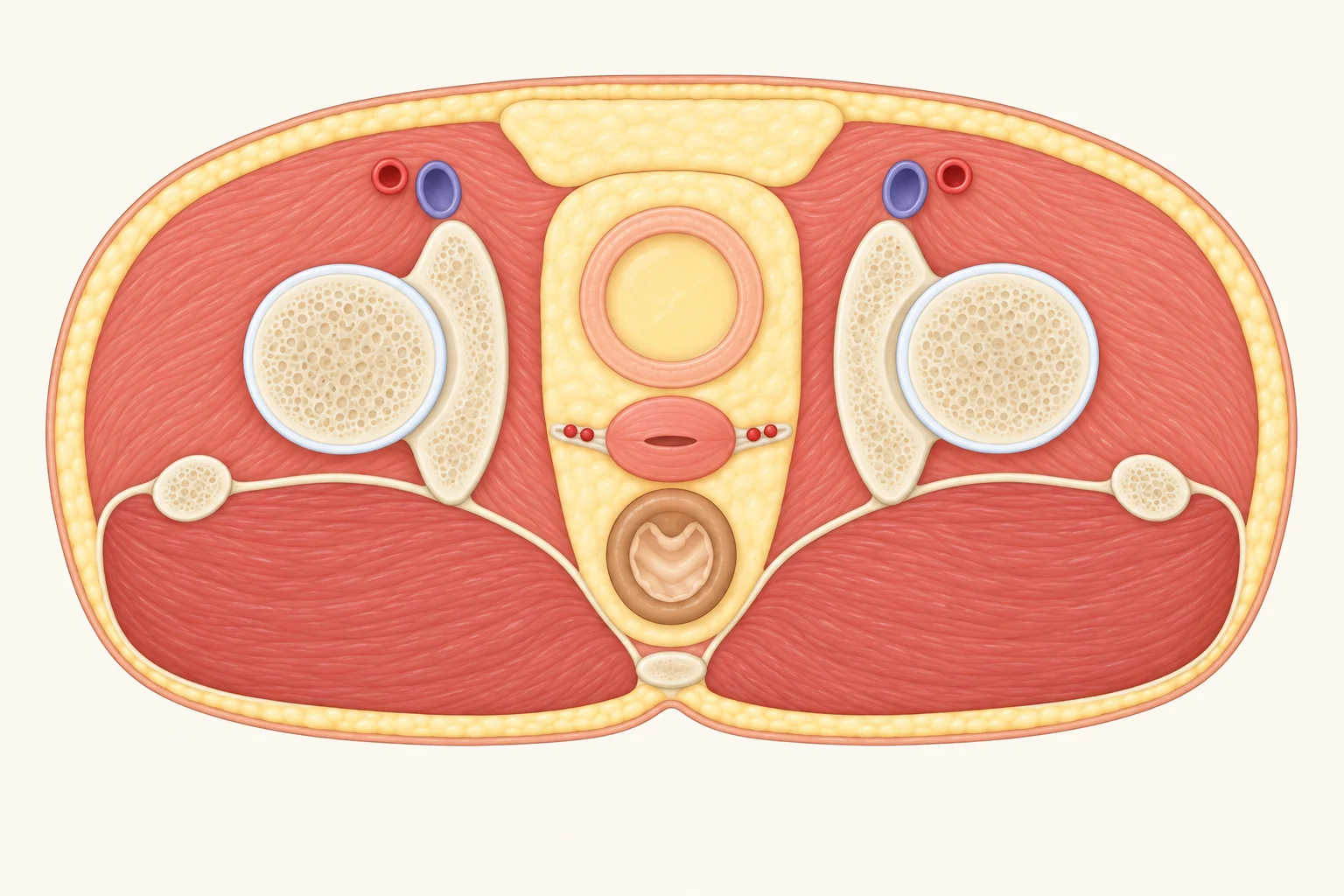
Looking up from the feet: front is at the top, and the body’s right side is on the left. The bladder sits right in front. Behind it sit the seminal vesicles in males or the uterus in females, with the rectum all the way in the back. See all cross-sections →
What it does
- Stores peeIts wall is a stretchy muscular bag: folded and roughly 2 inches (5 cm) across when empty, expanding smoothly to about 6 inches (15 cm) when full, lined inside with a tight, waterproof barrier so pee can’t seep back into the body. Typical capacity runs roughly 12–20 ounces (350–600 mL), with textbooks noting maximum stretch around 24 ounces (700 mL) and wide variation between people.
- Sends the heads-upAs pee trickles down steadily from your kidneys and reaches about 7–12 ounces (200–350 mL), stretch nerves in the bladder wall nudge your brain: time to find a bathroom – with plenty of spare capacity still left.
- Keeps the door shutTwo sphincter rings guard the exit. The inner ring stays closed automatically without you thinking about it; the outer ring works with your pelvic floor muscles under your conscious control, clamping shut to hold pee until it’s convenient.
- Empties on commandWhen you’re ready in the bathroom, your brain tells both sphincters to relax and triggers the bladder’s muscle layer (the detrusor) to squeeze evenly until it empties. You can’t choose when your kidneys make pee, but you do choose when to let it go.
What pee can tell you
Your kidneys decide how pale or dark your pee looks. But whether peeing burns, comes in sudden urges, sends you running too often, or stalls mid-stream points mostly to your bladder, urethra, or (in men) prostate.
- Burning, urgency, or cloudy peeStinging or burning when you pee, a constant or sudden urge to go, and cloudy pee usually point to a bladder infection (UTI). Darker or slightly stronger-smelling pee on its own is usually just dehydration. See a doctor the same day if you also have a fever, chills and shivering, or back pain under your ribs – the infection may have climbed up a ureter to your kidneys.See pee colors →
- Blood in your peeMost often isn’t serious – common culprits include bladder or kidney infections, stones, or an enlarged prostate. Even so, blood in pee is also the main early sign of bladder cancer, and it is often painless and comes and goes. Get checked urgently even if it doesn’t hurt and even if you only saw it once.See pee warning signs →
 Waking up at night to peeGetting up once a night is very common, and it becomes more frequent with age – up to 3 times a night over age 80 can still be normal. Making more urine at night, an overactive or irritated bladder (from stones or infection), or an enlarged prostate can all wake you up more often.How often is normal →
- Weak stream or trouble emptyingThe color looks normal, yet peeing takes effort: a slow start, straining, stop-and-start flow, or dribbling at the end. In middle-aged and older men, an enlarged prostate is a common cause – because the prostate wraps right around the urethra at the bladder exit and pinches it as it grows. Go to the ER now if you suddenly cannot pee at all and your lower belly hurts.See organ clues in pee →
Does holding it hurt your bladder?
- A healthy bladder can wait until a good momentWith a normal bladder, waiting until you reach a restroom once you feel the urge is generally fine. Just don’t make a habit of holding it far too long: overstretching can weaken the muscle over time and leave leftover pee behind where bacteria grow, raising UTI risk. If you’re prone to bladder infections, go when you feel the urge.
- Going “just in case” can backfire tooPeeing before your bladder actually needs to empty can train it to fire off urges early, especially if it already tends to be overactive. For overactive bladder, doctors often recommend bladder training: waiting 5 minutes when the urge hits, then slowly stretching that wait week by week for at least 6 weeks.
- Cutting back on water makes it worseDrinking too little only concentrates your pee, which irritates the bladder lining further and can actually worsen urgency and leaks. To curb night trips, taper fluids in the 2 hours before bed, and drink steadily during the day – typically 6–8 glasses (about 48–64 oz), unless your doctor has put you on fluid limits.
- Do extra water and cranberries prevent UTIs?They help some people with repeat infections. In a clinical trial of premenopausal women who drank little water and got 3 or more UTIs a year, adding about 6 cups (1.5 L) of water a day cut UTIs over a year from an average of 3.2 down to 1.7 (the trial was funded by a bottled-water company). Cranberry products may also help prevent repeat UTIs in susceptible women and children – though once an infection has started, they don’t ease symptoms or cure it, and anyone taking warfarin should avoid them.
Common bladder problems
- Bladder infection (UTI)Usually happens when gut bacteria get into the urethra and travel up to the bladder. Roughly half of women get at least one UTI in their lifetime, and about a quarter get repeat infections; UTIs are rare in men under 50. Not every mild case needs immediate antibiotics: non-pregnant, non-breastfeeding women under 65 without diabetes may start with acetaminophen for pain, plenty of fluids, and watchful waiting – and see a doctor promptly if symptoms worsen quickly or aren’t better after 2 days.
- Overactive bladder (OAB)Sudden, hard-to-hold urges to pee, going far more often than usual, waking up at night, and sometimes leaking before reaching the toilet. It becomes much more common after 65, yet it isn’t something you simply have to put up with as part of aging.
- Urinary incontinence (leaks)Leaking a few drops when you cough, sneeze, laugh, or lift something is stress incontinence (physical pressure on weak pelvic floor support, nothing to do with mental stress); leaking because a sudden urge hits too fast is urge incontinence. Incontinence is remarkably common across adults – especially women – yet most people never bring it up with a doctor out of embarrassment. Pelvic floor exercises (Kegels) help both types in both men and women, as long as you stick with them for a few months.
- Enlarged prostate (BPH)Not a disease of the bladder itself, yet one of the most frequent reasons middle-aged and older men struggle to pee smoothly – slow start, weak stream, feeling half-empty, and frequent night trips. It’s very common, usually manageable, and does not raise prostate cancer risk, though these symptoms still deserve a checkup.
- Bladder cancerThe most important warning sign is blood in pee, seen in roughly 80% of people diagnosed – often without pain and tending to come and go. It’s more common in men and people over 60. Smoking is a leading driver: cancer-causing chemicals in tobacco smoke are filtered by the kidneys into pee and sit against the bladder lining day after day, giving current smokers roughly 3–4 times the risk of people who have never smoked.
When to see a doctor
- Leaking pee of any kind – don’t hesitate to bring it up
- Trouble peeing: a slow start, weak stream, straining, or going noticeably more often than before
- Frequent or urgent peeing that isn’t explained by pregnancy or drinking extra fluids
- Pain in your bladder, lower belly, or lower back that lingers or keeps coming back
- Blood in your pee – even once, even a small streak, or if you aren’t sure it’s blood
- UTI symptoms together with a fever or unusually low temperature, chills and shivering, or pain in your lower belly or back under the ribs
- UTI symptoms if you are male, pregnant, 65 or older, under 15, diabetic, immunocompromised, or use a urinary catheter
- Symptoms that get worse quickly or haven’t improved after 2 days
- 2 UTIs in 6 months or 3 UTIs within a year
Go to the ER now: sudden total inability to pee with a painful, swollen lower belly, or UTI symptoms alongside confusion, extreme drowsiness, or trouble speaking. Don’t drive yourself: have someone take you, or call an ambulance (911 in the US and Canada, 999 in the UK, 112 in the EU).