 Know Thy Body
Know your bruises
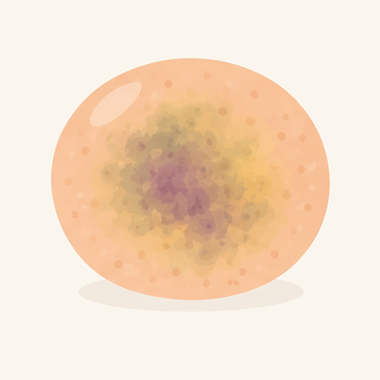
A bruise shows up when tiny blood vessels under unbroken skin break and leak blood into the tissue around them. Your body clears that blood away over time, shifting the color as it heals, usually within 2–3 weeks. A few kinds of bruises need a doctor’s look.
- Proper name
- Ecchymosis
- From
- Broken small blood vessels under the skin
- In short
- Most fade within 2–3 weeks
Which one looks most like yours?Tap one to see what it means
See all 9 readings
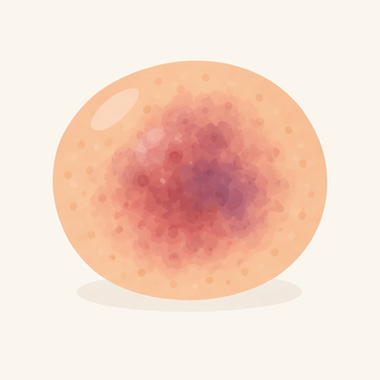
Red or purplishFresh bruise
Right after a bump, a bruise is often red or reddish-purple and may feel swollen and tender. On darker skin, it may look dark purple, deep brown, or black.
Ice for the first day or two: wrap an ice pack in a towel and hold it on for 10–20 minutes at a time.
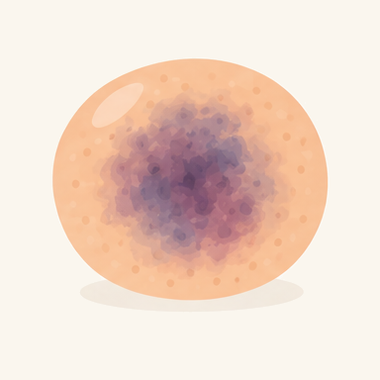
Blue or dark purpleOrdinary bruise
Bruises often turn blue or dark purple as the pooled blood under the skin is slowly broken down. Which colors appear and when varies from person to person and bruise to bruise.
Leave it alone. Don’t rub, massage, or put heat on it during the first 2 days.
Green or yellowFading
As hemoglobin breaks down into yellow bilirubin, the edges often turn yellow first and can look greenish.
After 2 days, you can use warmth with a warm (not hot) cloth.
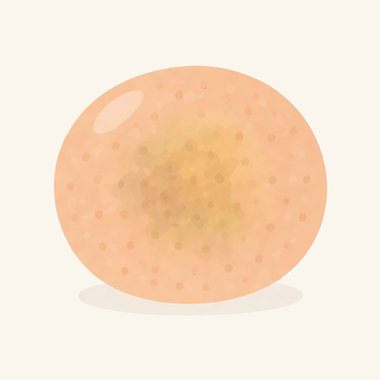
Yellow-brown, almost goneNearly healed
Most bruises fade within 2–3 weeks, sometimes leaving a light brown tint at the end. Yellow only tells you it’s at least several hours old, not the exact day it happened.
No treatment needed. If it still hasn’t faded after 3 weeks, see a doctor.
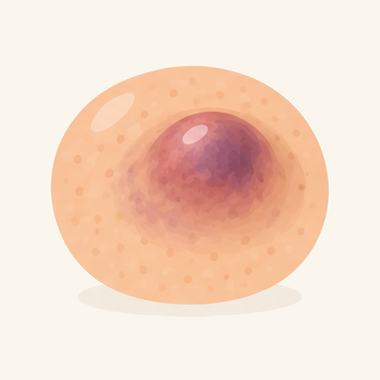
Raised lumpPossible hematoma
Pooled blood collects into a firm, raised bump under the skin. A hematoma takes longer to clear than a flat bruise, sometimes a month or more.
Ice and elevate. If the lump keeps growing or hurts badly, see a doctor. For a bump on the head in a baby under 1, call an ambulance (911 in the US and Canada, 999 in the UK, 112 in the EU) now.
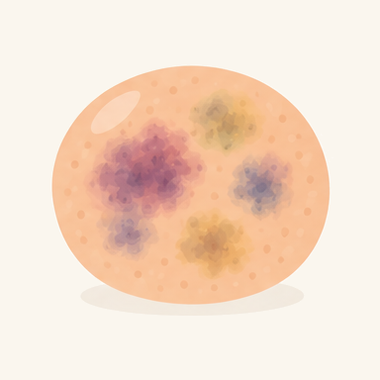
Showing up without bumpsWorth checking why
Common reasons are thinning skin with age, or medicines such as blood thinners, aspirin, steroids, or certain antidepressants. Small unexplained bruises on women’s thighs and upper arms are often harmless. Rarely, it’s a bleeding disorder.
See a doctor, and bring a list of your medicines and supplements. Definitely get checked if you also get frequent nosebleeds, bleeding gums, or heavy periods.
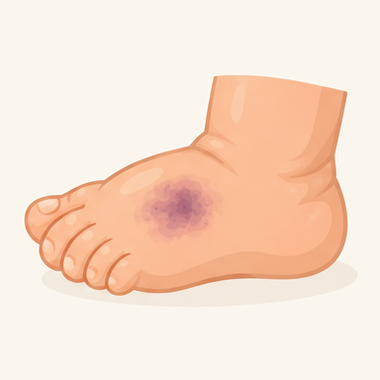
Bruise on a babyHave a doctor check
Babies who aren’t cruising yet rarely bruise (just 2.2% in one study). A bruise at this stage needs a medical check to look for either a bleeding condition or an injury.
Take your baby to a doctor. In a baby under 5 months old, a bruise anywhere needs to be checked.
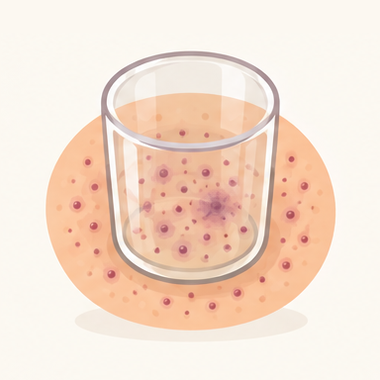
Tiny red spots that don’t fadeWith fever · ER now
Pinprick red or purple spots under a tenth of an inch (2 mm) across (petechiae) that don’t fade when you press a clear drinking glass against them. With a fever or drowsiness, this can be meningitis or sepsis.
If there’s a fever or unusual drowsiness, call an ambulance now. Even without a fever, see a doctor urgently (it can mean very low platelets).
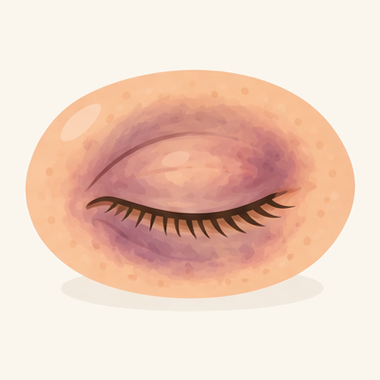
Around the eyes after a head hitER now
A hit directly to one eye causes an ordinary black eye. After a head injury, bruising around both eyes or behind an ear can signal a skull fracture, as can a black eye when the eye itself wasn’t hit.
Call an ambulance or go to the ER now.
Color can’t tell you what day a bruise happened. Pay more attention to how it appeared, where it is, how long it lasts, and any other symptoms.
When to see a doctor
- You bruise often for no clear reason, or get large, widespread bruises
- You also get frequent nosebleeds, bleeding gums when brushing, or heavy periods
- A bruise hasn’t faded after 2–3 weeks, or forms a firm lump underneath
- You take a blood thinner and hit your head or develop a black eye
- A child bruises easily along with fatigue, pale skin, frequent infections, fever, or bone pain (see a pediatrician promptly)
- A baby who isn’t crawling yet has any bruise, or a young child has bruises on the ears, neck, torso, or cheeks
Call an ambulance (911 in the US and Canada, 999 in the UK, 112 in the EU): tiny red spots or purple blotches that don’t fade under a glass along with a fever or drowsiness, which can be meningitis or sepsis. On darker skin, rashes are harder to see; check palms, soles, lips, tongue, and inside the lower eyelids.
After a head injury, call an ambulance: bruising behind an ear; bruising around both eyes; a black eye when the eye itself wasn’t hit; clear fluid leaking from an ear or nose; or any bruise, bump, or cut on the head of a baby under 1.
Sudden severe pain after an injury: if a limb feels increasingly swollen and tight, or goes numb or weak, that could be compartment syndrome; call an ambulance right away.
How a bruise forms
- BumpTiny vessels breakA knock or squeeze ruptures small blood vessels just under unbroken skin.
- LeakBlood pools in tissueEscaped blood collects under the skin, showing through as red, purple, or blue.
- CleanupColors start shiftingImmune cells move in to clear red blood cells, breaking hemoglobin down into biliverdin and then yellow bilirubin. Bilirubin spreads farther than hemoglobin, so the edges often turn yellow first.
- FadeSkin returns to normalA faint brown tint from iron-rich hemosiderin may linger briefly at the end before clearing.
How long to fade? Most bruises clear on their own within 2 weeks; a black eye takes slightly longer, usually 2–3 weeks. Deep bruises and hematomas can take a month or more. In older adults, bruises on the backs of hands or forearms may leave a brown patch for weeks, months, or permanently.
Where does green come from? Traditionally it’s blamed on biliverdin, though research notes biliverdin converts quickly into bilirubin, so the green you see may simply be blue-purple blood overlaid with yellow bilirubin.
When is a spot a bruise? Pinprick spots under a tenth of an inch (2 mm) across are petechiae; larger ones are purpura; anything wider than about 0.4 inches (1 cm) is ecchymosis (a standard bruise). Blood trapped under a smashed nail grows out slowly with the nail; see Know your nails to tell it apart from a dark pigment streak.
Can color tell you how old a bruise is?
Bruise color = days since injury
You’ve probably heard the neat timeline: red, then blue-purple, then green, then yellow. Yet a systematic review pooling the evidence found that almost any color can show up in fresh, mid-stage, and older bruises alike. Doctors estimating a bruise’s age within 24 hours by sight were right less than 40% of the time; in another study, pediatric ER doctors got it right 47.6% of the time and often disagreed with each other on the exact same bruise.
The review’s conclusion was blunt: there is no scientific basis for dating a bruise from its color. The one broad clue is yellow: a yellow bruise is generally at least several hours old (over 18 hours in one study), and people under 65 turn yellow faster.
Age, skin tone, body site, and depth all shape how a bruise looks and heals. On darker skin, bruises often appear purple, deep brown, or black and are harder to spot; one study found far fewer documented bruises in darker-skinned children, likely because they’re simply less visible.
Why some people bruise so easily
- Getting older
Skin thins, protective fat shrinks, and vessels grow more fragile, so light bumps bruise. Older adults often get flat, deep purple bruises on the backs of their hands or forearms (senile purpura), which are usually harmless. - Simple easy bruising (purpura simplex)
Very common, especially in women: small bruises pop up on the thighs, buttocks, and upper arms with no obvious bump, more often in people who are underweight, get lots of sun, or use steroids. - Medications
Blood thinners like warfarin, aspirin and other NSAIDs, corticosteroids, and SSRI antidepressants like fluoxetine all make bruising more likely. - Supplements
Ginkgo taken with blood thinners raises bleeding risk, and high-dose vitamin E supplements may interfere with clotting. A medical review found no link between fish oil and increased bleeding. - Clotting and blood conditions
Von Willebrand disease is the most common inherited bleeding disorder, affecting up to about 1% of people equally across men and women. Vitamin C deficiency (scurvy), liver disease, low platelets, and leukemia can also cause easy bruising.
Practical clues worth mentioning to a doctor: bruises showing up with almost no bump, happening 1–4 times a month, larger than a quarter, or with a firm lump underneath.
Bruises in babies and young kids
- 2.2%In one study, only 2.2% of babies not yet cruising had any bruises, and only 0.6% of babies under 6 months.
- 51.9%More than half of walking toddlers had bruises, mostly on the shins, knees, and forehead where bones sit close to the surface.
- 5 monthsIn a pediatric clinical decision rule, a bruise anywhere on a baby under 5 months old calls for a medical check.
Bumps and bruises from running and climbing are normal in active kids and show up on bony, forward-facing spots. What deserves extra attention are bruises on soft, protected areas that don’t get bumped easily.
The same study highlighted higher-risk areas in children under age 4: the torso (chest, belly, back, buttocks, and genitals), ears, neck, upper lip frenulum, jawline, cheeks, eyelids, and whites of the eyes. Also check any bruise in a baby not yet crawling or pulling up to stand, or clusters of similar-looking marks shaped like a hand or object.
These signs don’t automatically mean abuse (they can also point to a bleeding disorder), but a pediatrician always needs to check them.
What helps a bruise
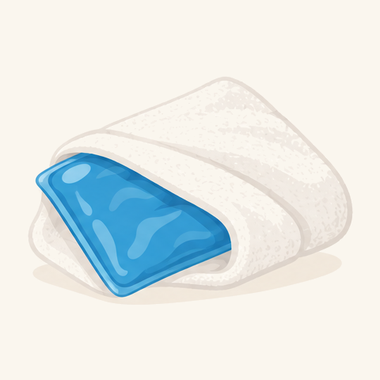 Ice for the first 1–3 daysWrap an ice pack or a bag of frozen peas in a towel and apply for 10–20 minutes every few hours. Never put ice straight on bare skin.
 Elevate and restIf the bruise is on an arm or leg, prop it up above heart level when you can to reduce swelling.
 Acetaminophen for painSkip aspirin (unless a doctor prescribed it long-term), because it can worsen bruising. Advice varies on ibuprofen; ask a doctor or pharmacist if you take regular medications.
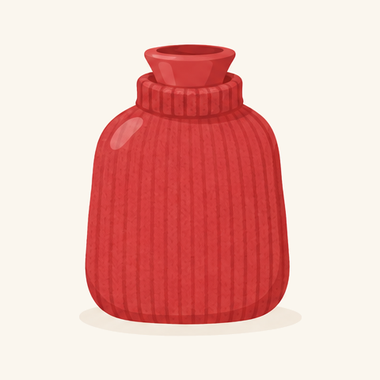 Warmth after 2 daysSkip hot packs, hot baths, alcohol, and massage for the first 48 hours so vessels don’t keep oozing. After 2 days, a warm (not hot) cloth or heating pad can feel soothing, though no strict trials prove heat speeds healing.
 Rolling a warm egg?Pressing or rubbing hard in the first few days can actually worsen bleeding and swelling. No clinical studies back egg-rolling; after the first few days, a warm egg is no different from a warm compress.
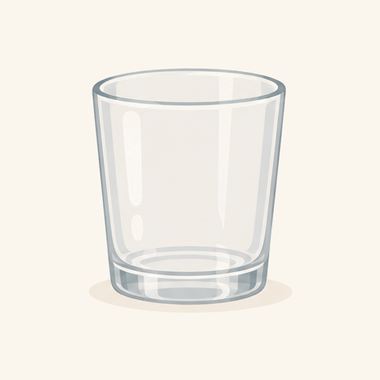 The drinking-glass testIf tiny red spots or purple patches appear, press a clear drinking glass firmly against them. If you can still see the spots through the glass and the child or adult has a fever or seems drowsy, call an ambulance right away.
Does arnica cream work? Studies disagree: one systematic review found no rigorous trials showing homeopathic arnica works better than a placebo, while another review found current evidence too limited to support it. Almost all those trials looked at post-surgery bruising rather than everyday bumps.