 Know Thy Body
Field guide/Organs · Digestive system
Know your gallbladder
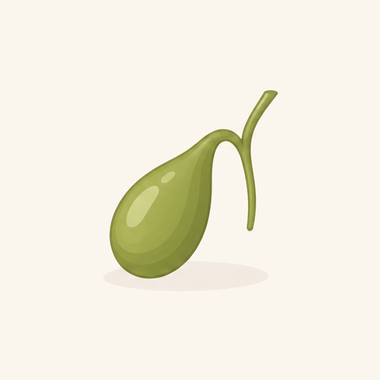
Your gallbladder is a small, pear-shaped pouch tucked under your liver. The liver makes bile nonstop; the gallbladder stores it between meals and squeezes it into the small intestine when you eat.
- Proper name
- Vesica biliaris
- Where
- Upper right belly, under the liver
- Length
- About 3–4 in (7–10 cm)
- Gallstones
- About 10–15% of US adults
Where it sits
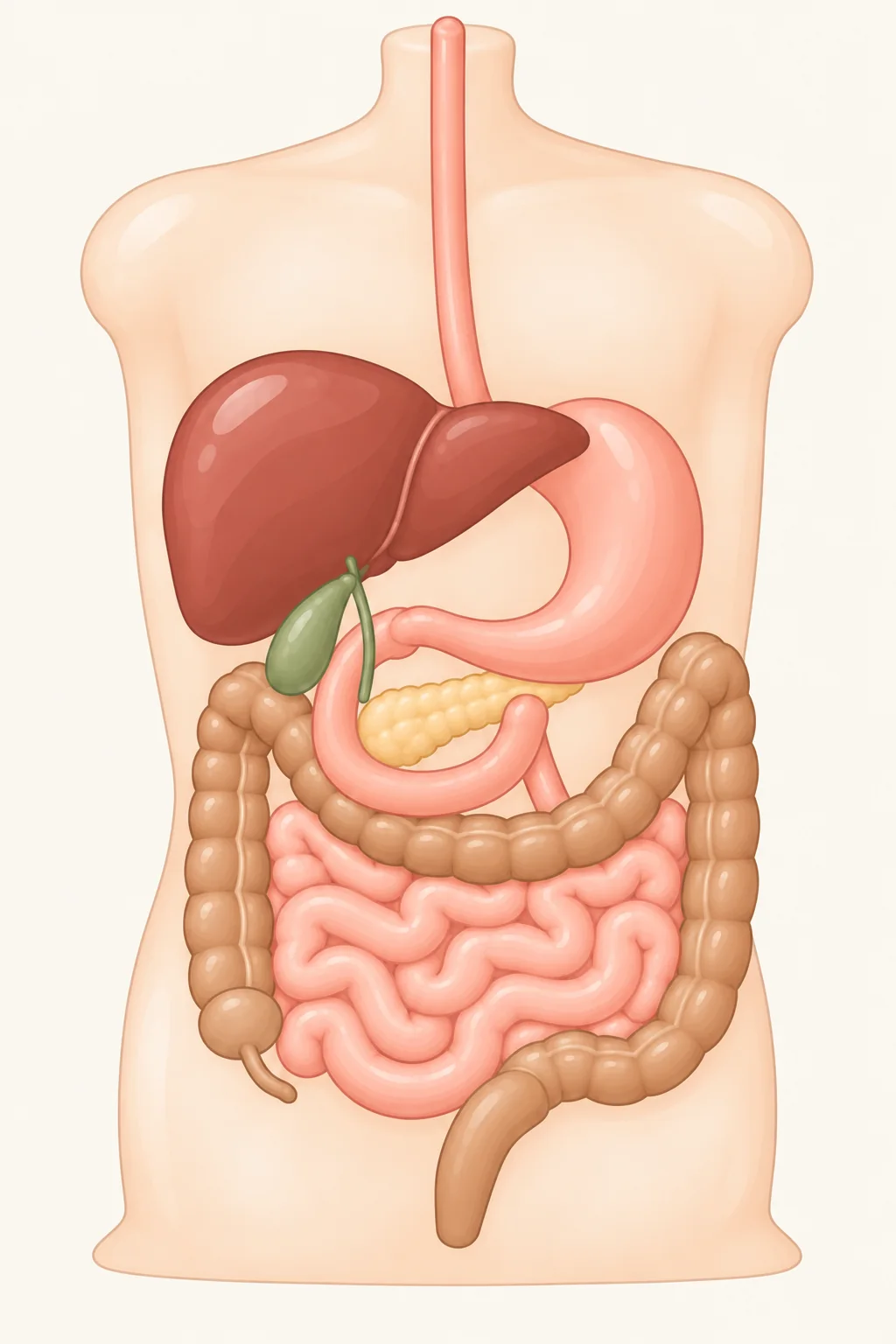
bladderDuodenumRectumEsophagusBody’s rightBody’s left
The gallbladder sits in your upper right belly, tucked into a shallow hollow under your liver.
From its narrow neck runs a thin tube that joins the duct from the liver to form the common bile duct. That duct meets the main duct from the pancreas so both open into the duodenum, the first part of the small intestine, through the same doorway. Because they share that exit, a blockage in this spot can back up both bile and pancreatic juices.
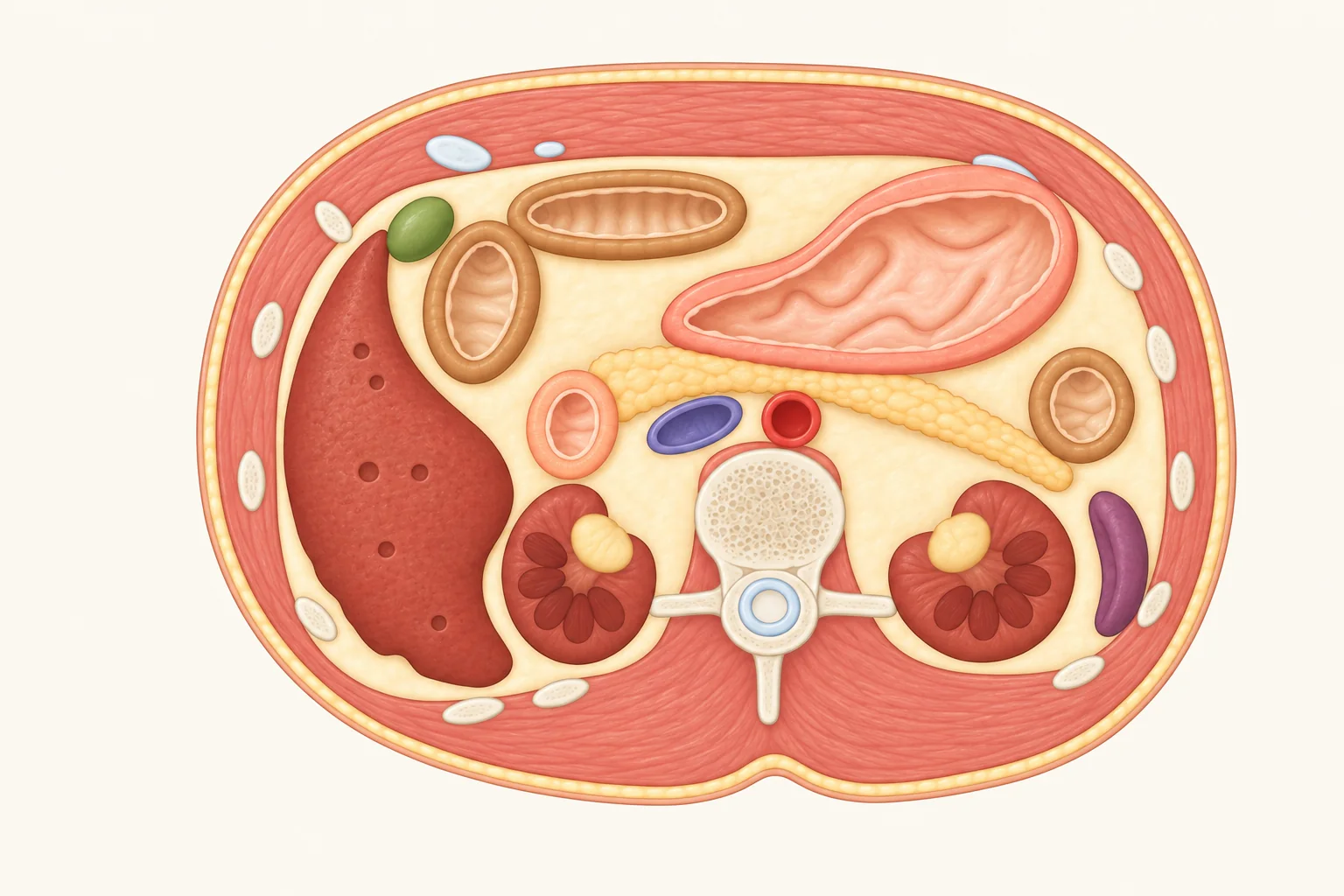
Looking up from the feet: front is at the top, and the body’s right side is on the left. The gallbladder hugs the underside of the liver near the front of your belly. See all cross-sections →
What it does
- Stores and concentrates bileBetween meals, when the small intestine doesn’t need much bile, bile made by the liver collects in the gallbladder. The gallbladder pulls some water out along the way so it can pack more concentrated bile into a small pouch.
- Squeezes it out at mealsWhen food – especially fatty food – hits the gut, the small intestine signals for extra bile. Muscle in the gallbladder wall tightens, sending concentrated bile down the common bile duct into the duodenum.
- Breaks up fat and carries out bilirubinBile acids (bile salts) work like detergent, breaking large globs of fat into tiny droplets so enzymes from the pancreas can finish digesting them for absorption. Bile also carries bilirubin, the pigment that gives poop its brown color.
What poop can tell you
When bile’s path is blocked or there isn’t enough of it, poop and pee are usually the first things to change: poop loses its brown or turns oily, and pee turns dark. If a stone jams tightly or backs up the pancreas, severe belly pain and vomiting often follow.
- Pale or clay-coloredWhen bile cannot reach the gut, poop loses its brown color. Gallstones or a narrowed or blocked bile duct can do this. See a doctor if it lasts more than a few days; if your pee is also dark or your skin or the whites of your eyes look yellow, contact a doctor right away.See organ clues in poop →
- Pale, greasy, and floatingWithout enough bile, fat goes undigested, leaving poop pale, oily, and apt to float.The pancreas can do this too →
- Dark pee and yellow skinWhen bile can’t drain, bilirubin spills back into the blood, leaves through the kidneys to darken your pee, and causes jaundice. If your skin or the whites of your eyes turn yellow, get medical care right away.Know your liver →
Common gallbladder problems
- GallstonesHardened pebbles formed when cholesterol or bilirubin in bile gets out of balance and crystallizes – anywhere from a grain of sand to a golf ball, single or many. About 10–15% of US adults have them, and most never cause pain or block anything.
- Biliary colic (gallstone attack)When a stone wedges into the gallbladder’s exit or a bile duct, the pouch keeps trying to squeeze bile past it. That causes sudden, heavy, steady pain in the center of the upper belly or under the right ribs, lasting more than 30 minutes and often several hours. Attacks tend to strike after a greasy meal or at night, and shifting positions or going to the bathroom doesn’t ease them.
- Cholecystitis (gallbladder inflammation)Usually happens when a stone completely plugs the gallbladder outlet and trapped, concentrated bile irritates the wall. Unlike biliary colic, the severe pain doesn’t fade after a few hours and often comes with a high fever, chills and shivering, nausea, vomiting, and sometimes yellow skin or eyes.
- Bile duct stones and cholangitisA stone that slips out of the gallbladder into the common bile duct blocks bile from reaching the gut altogether, causing jaundice, pale poop, and dark pee. If the trapped bile becomes infected with bacteria (cholangitis), high fever, chills, and intense belly pain set in and need emergency treatment.
- Gallstone pancreatitisBecause the common bile duct and pancreatic duct share one opening into the duodenum, a stone stuck at that junction backs up pancreatic juices too. Digestive enzymes activate early inside the pancreas itself, triggering sudden severe belly pain and vomiting. Gallstones are one of the leading causes of acute pancreatitis. See pancreas.
When to see a doctor
- Repeated pain in the center of your upper belly or under your right ribs
- Pale or clay-colored poop for several days in a row
- Repeatedly pale, greasy, floating poop
See a doctor urgently: belly pain that won’t ease after more than 30 minutes.
Go to the ER now: sudden severe belly pain; pain spreading to your back with vomiting; a high fever or bouts of chills and shivering; or yellow skin or whites of your eyes. Don’t drive yourself: have someone take you, or call an ambulance (911 in the US and Canada, 999 in the UK, 112 in the EU).