 Know Thy Body
Field guide/Organs · Digestive system
Know your pancreas
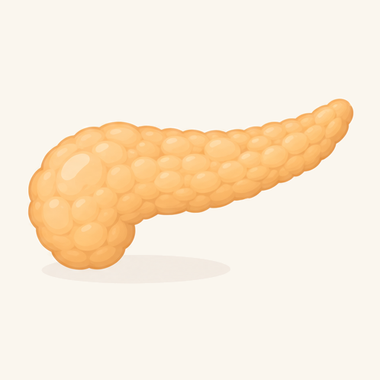
Your pancreas lies deep behind your stomach and in front of your spine, about the length of your hand. It splits two big jobs: sending digestive juice to the small intestine, and sending blood-sugar hormones into the bloodstream.
- Proper name
- Pancreas
- Where
- Behind the stomach
- Weight
- About 3 oz (90 g)
- Output
- About 1–4 quarts (1–4 L) of juice a day
Where it sits
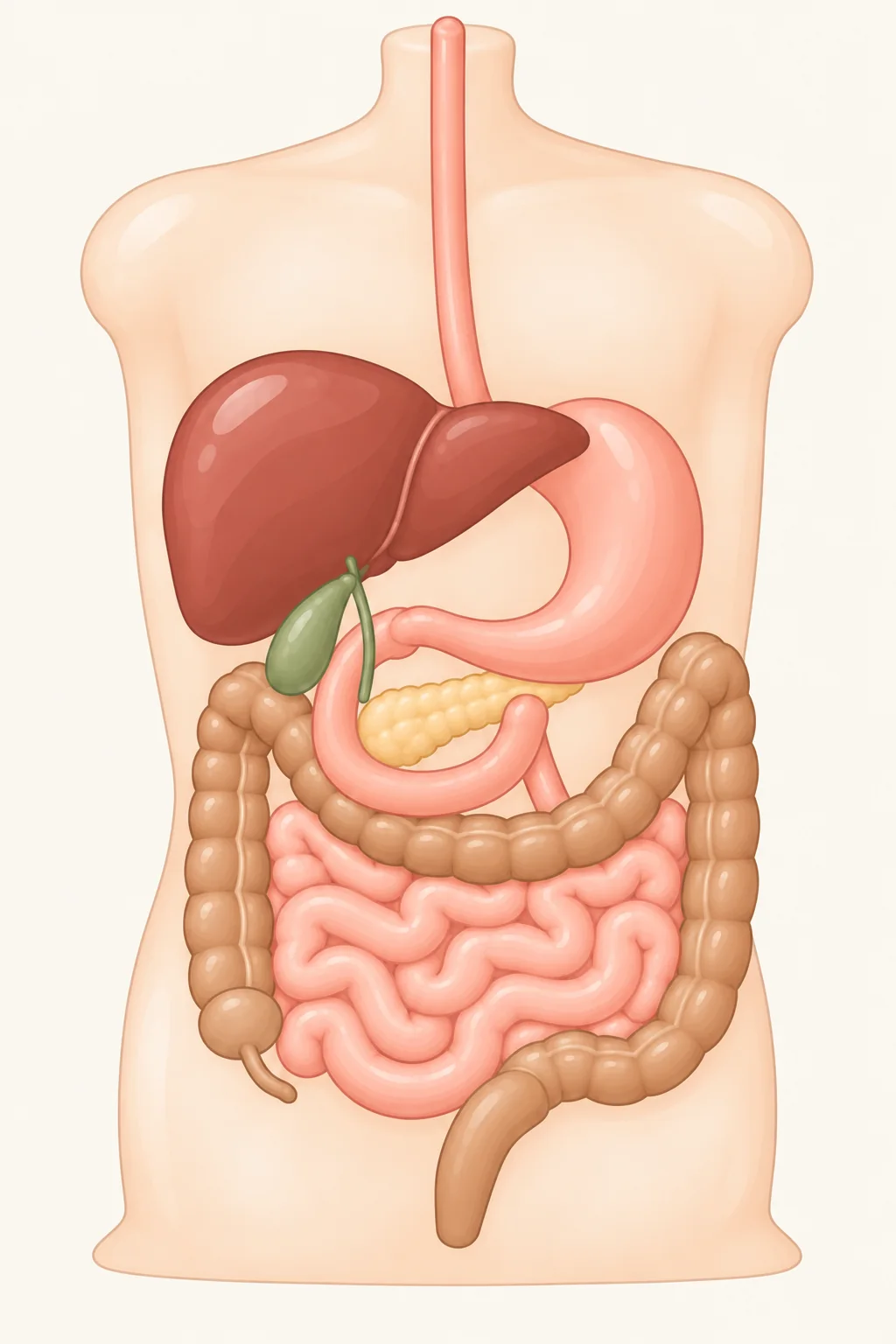
bladderDuodenumRectumEsophagusBody’s rightBody’s left
The pancreas lies crosswise behind your stomach. Its broader head sits on the right side of your body, cradled inside the C-shaped loop of the duodenum; its narrow tail stretches left toward the spleen.
Smaller ducts inside the pancreas join into one main pancreatic duct, which meets the common bile duct so pancreatic juice and bile pour into the duodenum together. That’s why a growth in the head of the pancreas can pinch the bile duct shut.
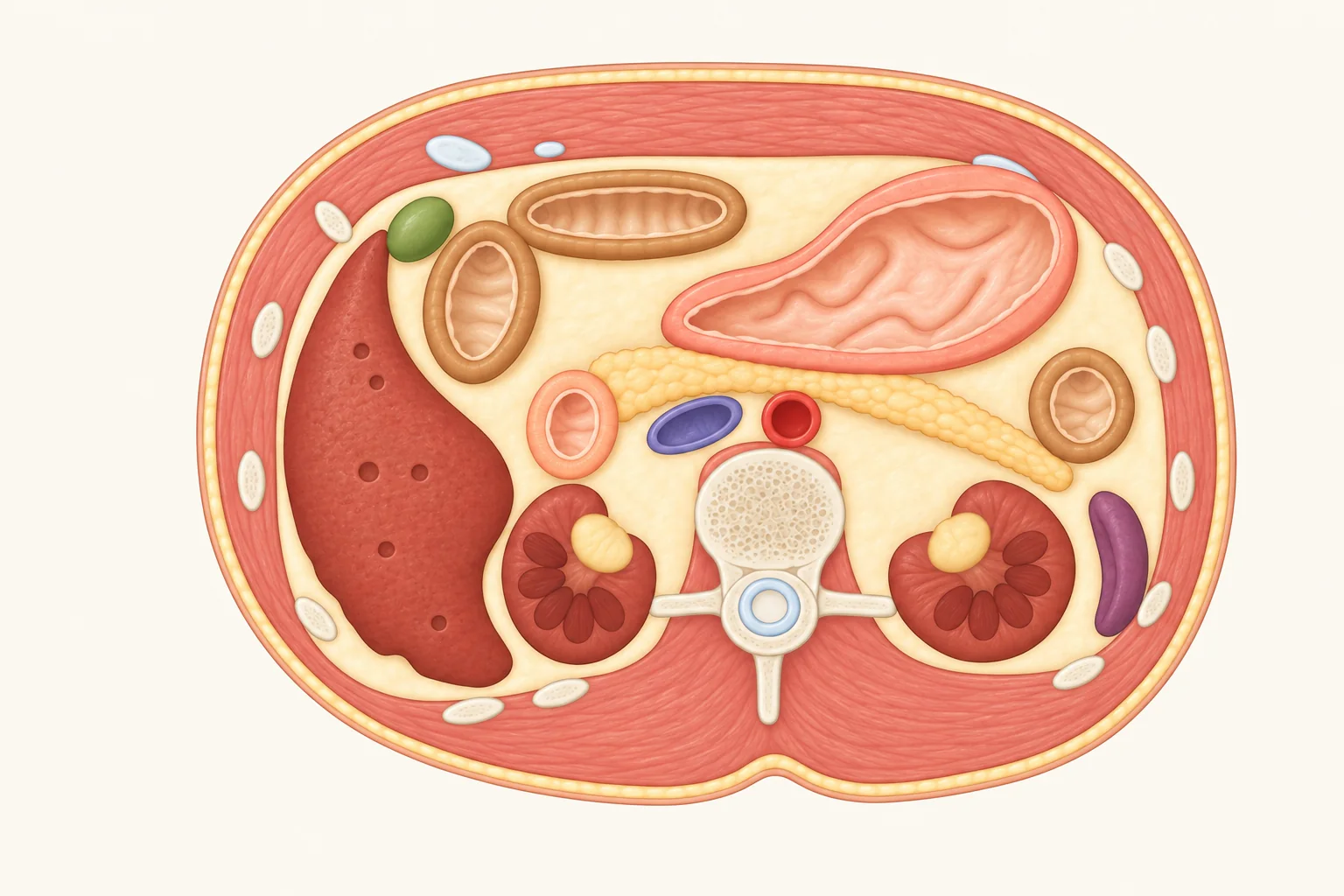
Looking up from the feet: front is at the top, and the body’s right side is on the left. The pancreas lies flat directly behind the stomach, its head tucked into the duodenum and its tail reaching toward the spleen on the left. See all cross-sections →
What it does
- Makes digestive juiceEvery day, about 1–4 quarts (1–4 L) of pancreatic juice flow down the pancreatic duct into the duodenum. It carries alkaline fluid to neutralize stomach acid along with enzymes that break down carbs, fats, and proteins.
- Lowers blood sugar: insulinReleased straight into the bloodstream. When blood sugar rises after a meal, the pancreas sends out insulin – acting like a key that lets glucose into cells for fuel or stores it in the liver, bringing blood sugar back down.
- Raises blood sugar: glucagonWhen you’re fasting or exercising and blood sugar dips, the pancreas releases glucagon, signaling the liver to unpack stored glycogen back into glucose so your cells don’t run short on fuel.
What poop can tell you
When the pancreas doesn’t make enough digestive enzymes – a condition called exocrine pancreatic insufficiency – the small intestine can’t finish digesting food. Undigested fat in poop is often the first visible clue.
- Foul-smelling, greasy, floating, hard to flushWithout enough fat-digesting enzymes, dietary fat passes straight out in your poop. Chronic pancreatitis, cystic fibrosis, pancreatic cancer, or prior surgery on the pancreas or upper gut can cause this, often alongside diarrhea, bloating, and weight loss. See a doctor if it keeps happening.See organ clues in poop →
- Pale poop, dark pee, and yellow skinIf a growth on the pancreas presses the bile duct shut, bile can’t reach the gut – causing pale poop, dark pee, yellowing skin and eyes, and often itchy skin. See a doctor urgently if your skin or eyes turn yellow.Know your liver →
Common pancreas problems
- Acute pancreatitisSudden inflammation where enzymes meant for the duodenum switch on early inside the pancreas and start digesting the gland itself. The hallmark is sudden, severe upper belly pain that often radiates straight through to the back, with fever, nausea, and vomiting. The two leading triggers are gallstones plugging the shared outlet and heavy drinking.
- Chronic pancreatitisRepeated, long-term inflammation slowly scars and shrinks the pancreas. Heavy alcohol use is a major driver, alongside smoking and inherited risk. Losing enzyme output leads to foul-smelling, floating poop and weight loss; as hormone-making cells wear down too, diabetes can follow.
- Exocrine pancreatic insufficiency (EPI)Following chronic pancreatitis, cystic fibrosis, or pancreas or stomach surgery, the pancreas stops sending enough enzymes to break down food properly. Diarrhea, bloating, belly cramps, and greasy, floating poop are common – and over time, weight loss and shortages of fat-soluble vitamins.
- DiabetesIn type 1 diabetes, insulin-making cells are destroyed and stop producing insulin. In type 2, cells resist insulin first and the pancreas eventually falls behind; chronic pancreatitis or pancreas damage can also cause diabetes. High blood sugar causes constant thirst, frequent peeing, and weight loss. Vomiting, belly pain, and fruity-smelling breath can signal diabetic ketoacidosis: call an ambulance (911 in the US and Canada, 999 in the UK, 112 in the EU) right away.
- Pancreatic cancerEarly symptoms often feel like ordinary indigestion: poor appetite, unexplained weight loss, fatigue, and upper belly or back pain. A tumor in the head of the pancreas pressing on the bile duct can also turn skin and eyes yellow, make pee dark and poop pale, and cause itchy skin.
When to see a doctor
- Repeatedly foul-smelling, greasy, floating poop that won’t flush
- Noticeable weight loss without trying, or loss of appetite
- Belly pain, bloating, or indigestion that keeps getting worse or lasts longer than 2 weeks
See a doctor urgently: yellow skin or whites of your eyes, vomiting for more than 2 days, or diarrhea for more than 7 days.
Go to the ER now: sudden severe belly pain radiating to your back, persistent abdominal swelling, a fast heartbeat or shortness of breath, or bluish bruising around your belly button, flanks, or outer thighs. Don’t drive yourself: have someone take you, or call an ambulance.