 Know Thy Body
Know your poop
The shape and color of your poop reflect what you’ve eaten lately and how fast things are moving through your gut. To tell whether it’s normal, look at three things.
- Proper name
- Feces, or stool
- From
- The large intestine, out through the rectum
- Takes
- About 6 hours to the colon, then up to 2 days there
Which shape is closest?Tap one to see what it means
See all 7 readings
-
Type 1Separate hard lumpsConstipation
It sat in the large intestine too long and your gut pulled out almost all the water, so it comes out as hard pellets that often take straining to pass.
Things to try: drink more water; eat more vegetables, fruit, whole grains and beans; move around more; and don’t hold it in when you need to go.
-
Type 2Lumpy sausageA bit dry: mild constipation
It’s shaped like a log, but made of hard lumps squeezed together: still moving a little slowly, still a little dry.
Things to try: the same as for type 1. Start with water, fiber and moving more.
-
Type 3Sausage with cracksNormal
Formed and easy to pass, with some cracks on the surface. Its speed and water content are both in the right range.
Keep it up. If the cracks are deep and it’s hard to pass, drink a bit more water.
-
Type 4Smooth, soft sausageIdeal
Like a smooth, soft snake, and it comes out easily. This is the one the textbooks draw as ideal.
Keep doing what you’re doing with food and routine.
-
Type 5Soft blobs with clear edgesSoft, on the edge of normal
Soft lumps with clear-cut edges that pass easily. It’s moving a little fast. This is common in people who go several times a day.
Now and then, it’s nothing to worry about. If it’s always like this, check whether you’re getting enough fiber.
-
Type 6Mushy, with ragged edgesLoose: mild diarrhea
Fluffy pieces with ragged edges that don’t hold a shape: it moved too fast for your gut to absorb the water.
Things to try: drink fluids and keep meals plain. If it hasn’t improved after a few days, see a doctor.
-
Type 7WateryDiarrhea
No solid pieces at all: it barely stopped in the large intestine. Common causes are a gut infection or something you ate.
Replace fluids and salts first so you don’t get dehydrated. If it hasn’t improved after a few days, or comes with a fever, severe belly pain, a dry mouth or peeing very little, see a doctor; if there’s blood in it, see a doctor urgently.
One time doesn’t tell you much. What counts is the pattern over days to weeks, and whether it has changed from what’s normal for you.
When to see a doctor
- There’s blood in your poop, or it’s black or dark red
- You have rectal bleeding
- Your bowel habits change and stay changed: looser, harder, or noticeably more or less often
- You keep feeling you haven’t finished, even right after you go
- You have belly pain or bloating, or you can feel a lump
- You’re losing weight without trying
- You’re tired all the time or short of breath (it could be anemia)
See a doctor urgently: your poop is dark red, or you have bloody diarrhea.
Go to the ER now: your poop is black, sticky and foul-smelling, like tar; the rectal bleeding won’t stop; or there’s a lot of blood, or clots, in your poop. Don’t drive yourself: have someone take you, or call an ambulance (911 in the US and Canada, 999 in the UK, 112 in the EU).
Many of these symptoms have other, less serious causes, but each one is worth having a doctor check.
How it’s made
- StartMouth and stomachYou chew it; your stomach churns it and mixes in acid and digestive enzymes.
- About 6 hoursSmall intestineAs soon as food arrives, two things join it: bile, which the liver makes and the gallbladder stores, and digestive juices from the pancreas. Your body absorbs most nutrients here; what’s left is thin, almost liquid.
- Up to 36–48 hoursLarge intestineIt pushes everything along slowly, pulling water back into the body as it goes, and that mostly decides how firm your poop will be. Gut bacteria ferment undigested fiber here too.
- Varies by personInto the rectum, and outOnce enough has collected, you feel the urge to go. How long the whole trip takes varies from person to person, and with what and how much you’ve eaten.
The shape tells you roughly how fast it traveled. The longer poop stays in the large intestine, the more water your gut pulls out of it, and the more it looks like the hard lumps of type 1; the faster it moves, the less time there is to absorb water, and the closer it gets to the watery type 7.
What’s in it
In most studies, water makes up about three-quarters.
Take the water away, and the biggest part of what’s left is usually bacteria, living and dead, rather than leftover food. The brown comes from bile. Bilirubin, left over from broken-down red blood cells, goes from the liver into bile and on into the gut, where bacteria turn it, step by step, into stercobilin: that’s what makes poop brown.
- Bacteria
A quarter to half of the organic part: the biggest share of the solids. - Undigested carbohydrates and fiber
Fiber from vegetables and whole grains gives poop bulk and helps it move. - Protein and fat
Small amounts that weren’t fully absorbed; how much depends on what you ate. - Minerals, and cells shed from the gut lining
The lining of your gut keeps renewing itself, and old cells leave with the poop.
How often is normal?
3 times a day
to 3 times a week
Anywhere in that range is common. In a US national survey, about 96% of adults who said their bowel habits were normal fell inside it. You don’t have to go every day. The number matters less than whether it has changed, and stayed changed, compared with what’s normal for you.
What the color means
- Shades of brownNormal. It gets lighter or darker with what you eat, and none of it is a worry.
- GreenUsually nothing: leafy greens, green food coloring (in drink mixes or ice pops, say), iron supplements, or poop moving too fast for bile to turn brown.
- Yellow, greasy, very smellyYour gut may not be absorbing fat properly, which points to the pancreas and small intestine. Once is usually a fatty meal; if it keeps happening, get it checked.
- BlackIron supplements, bismuth medicines such as Pepto-Bismol, black licorice and lots of blueberries can turn poop black. If none of those explain it and it’s black and sticky like tar, it may be bleeding in the stomach or duodenum: go to the ER now.
- RedBeets, cranberries, tomato juice and red food coloring (in drink mixes or gelatin, for example) can turn it red. If you haven’t had anything like that and see red, it may be blood: see a doctor.
Which organ is it telling you about?
What becomes your poop passes through the stomach, small intestine and large intestine, and the liver, gallbladder and pancreas add to it along the way. Shape, color and blood each point to different organs. Tap one, or keep reading, and the organs behind it light up on the diagram.
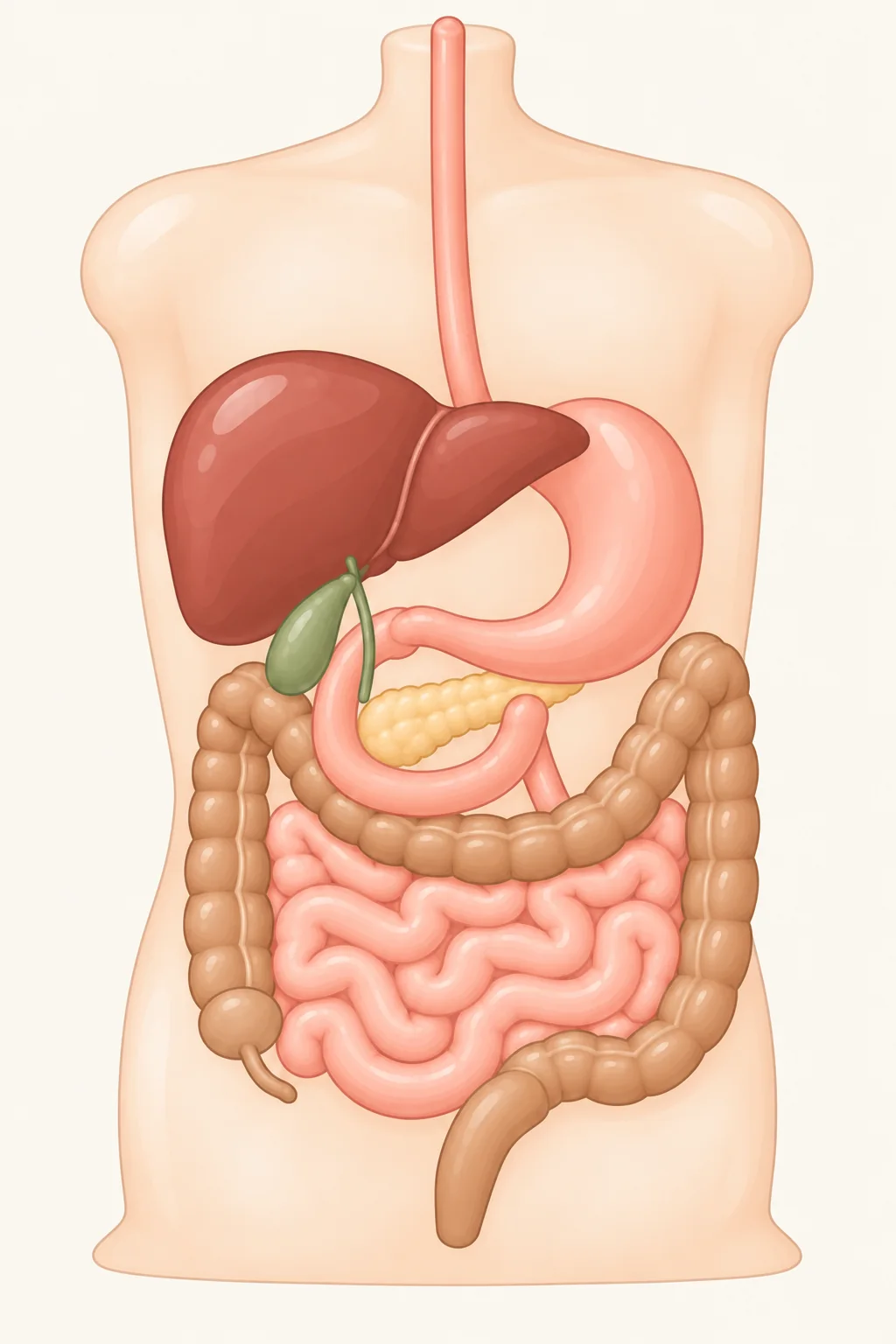
bladderDuodenumRectumEsophagusBody’s rightBody’s left
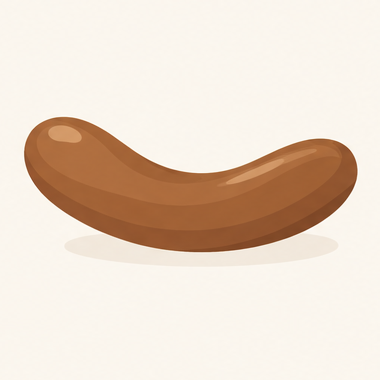 Too hard or too loose
The large intestine’s main job is pulling water back. The longer poop stays there, the drier and harder it gets (types 1 and 2); the faster it goes, the looser it is (types 6 and 7). Shape mostly tells you how fast your large intestine is moving.
Related organ: large intestine
- Brown
The liver puts bilirubin, left over from worn-out red blood cells, into bile. The gallbladder stores the bile and squeezes it into the small intestine at mealtimes, and gut bacteria turn it into the brown pigment. Brown poop means that whole route is open.
Related organs: liver, gallbladder
- Pale or clay-colored
When bile can’t reach the gut, poop loses its brown. The problem may be in the liver (hepatitis or cirrhosis, for example), or a gallstone may be blocking the bile duct; a lump on the pancreas can also press the duct shut. If your pee is also turning dark and your skin or the whites of your eyes are turning yellow, contact a doctor right away.
Related organs: liver, gallbladder, pancreas
- Greasy, very smelly, floats and won’t flush
Enzymes from the pancreas and bile break fat down, then the small intestine absorbs it. If any link in that chain fails, fat comes out in the poop: pancreatitis leaves too few enzymes, celiac disease damages the small intestine, and too little bile does it too. Once is usually a greasy meal; if it keeps happening, get checked.
Related organs: pancreas, small intestine, gallbladder
- Green
Bile starts out yellow-green and only slowly turns brown in the gut. When things move too fast (with diarrhea, for example), it comes out before it has changed color. Lots of leafy greens or iron supplements can also turn poop green.
Related organs: small intestine, large intestine
- Black and sticky, like tar
When the stomach or duodenum bleeds (from an ulcer, for example), your gut digests the blood on its way down, and poop turns black, sticky and foul-smelling. Iron, Pepto-Bismol, black licorice and blueberries can also turn poop black; if none of those explain it, go to the ER now.
Related organ: stomach
- Bright red blood
The brighter the red, the closer to the anus the bleeding usually is. A little bright blood on the toilet paper or on the surface of your poop most often comes from hemorrhoids or an anal fissure, and a fissure usually hurts a lot when you go. Dark red or black blood may be coming from higher up: see a doctor urgently. If it’s black and sticky like tar, go to the ER now.
Related organ: large intestine (rectum and anus)
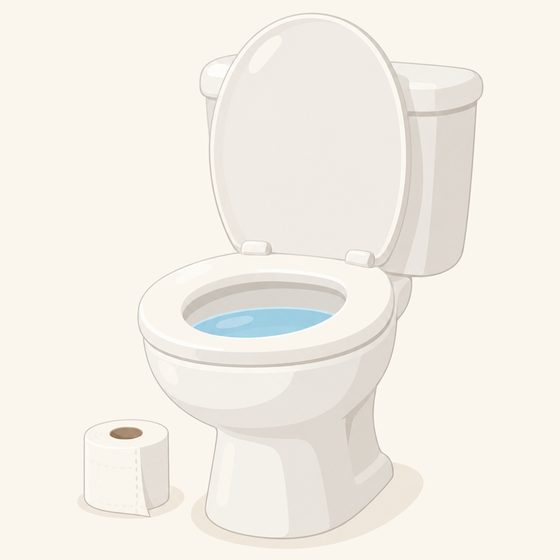 Feeling like you haven’t finished
You feel the urge to go once poop reaches the rectum. Hemorrhoids can make you feel you need another bowel movement right after you’ve had one, but if the feeling doesn’t go away, see a doctor: it’s also on the American Cancer Society’s list of colorectal cancer symptoms, and on the NHS’s in the UK.
Related organ: large intestine (rectum and anus)
Qiqi clogs the toilet
- Proper name
- Type 2, extra large
- From
- Qiqi
- Takes
- 3 days, from needing to go to going
- Day 1“In a minute.”A little urge to go, but the block tower needs one more level.
- Day 2“In a minute.”The tower fell over. Time to rebuild.
- Day 3“Just one more minute…”Tummy feels tight and full. Not hungry for dinner.
- Day 4Can’t wait any longerA long, long sit on the toilet, and out comes the biggest one anybody has ever seen. Flush: instead of going down, the water slowly rises.
The whole family comes running. A grown-up grabs the plunger: thwop, thwop, thwop… On the seventh plunge, the toilet gives a gurgle and clears.
Qiqi, standing in the doorway, says quietly: “It clogged itself.”
It didn’t clog itself
For those three days, the poop sat piling up in the last stretch of the large intestine. The large intestine kept pulling water out as usual, whatever Qiqi was building: the longer the poop stayed, the drier it got, sliding toward types 1 and 2, while more kept arriving behind it, until it added up to one big, thick, hard log. A log like that hurts coming out, and once it has hurt, you want to go even less. The UK’s NHS calls this a vicious cycle: the more you hold it in, the worse the constipation gets.
Believe it or not
- “Can clog the toilet” is in the doctors’ criteriaThe Rome IV criteria, which doctors use to diagnose functional constipation in children, include a history of stools so large they can block the toilet. One time doesn’t count, though: a child has to meet at least two of the criteria, at least once a week, for at least a month.
- Toilets take a test, and the test is fake poopTo be sold in the US and Canada, a toilet has to pass a test: flush away 350 grams (about 12 ounces) of fake poop made of soybean paste in one go, in at least 4 of 5 tries. The 350-gram figure comes from a 1978 study in Bristol, England, and one of its authors, Heaton, went on to come up with the 7 types on this page.
What Qiqi learned
- Go when you need toThe block tower isn’t going anywhere, and poop gets harder the longer it waits.
- Drink plenty, and eat plenty of fruit and vegetablesThe fiber in fruit and vegetables makes poop easier to push along.
- Sit on the toilet for a bit after meals or before bedWhether anything comes out or not, a grown-up says “nice try.”
- Plant your feetIf they don’t reach the floor, put a step stool under them, so it’s easier to push.
If it clogs again, don’t flush again: the water will overflow. One clog on its own means nothing, but if a child poops fewer than 3 times a week, it hurts or there’s blood, or the poops are often big and hard, take them to a doctor, and sooner rather than later.