 Know Thy Body
Field guide/Organs · Digestive system
Know your liver
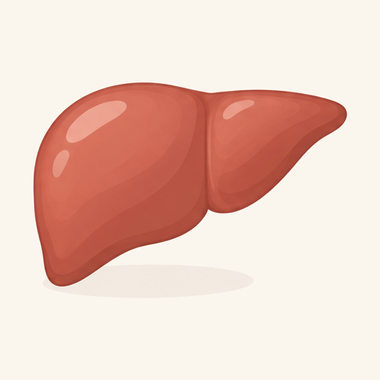
Your liver sits behind the ribs in your upper right belly, roughly the size of an American football. Every day it makes bile, stores fuel, and clears out toxins. Even the brown color of your poop starts here.
- Proper name
- Hepar
- Where
- Upper right belly
- Weight
- About 3–5 lb (1.4–2.3 kg)
- Makes
- Bile
Where it sits
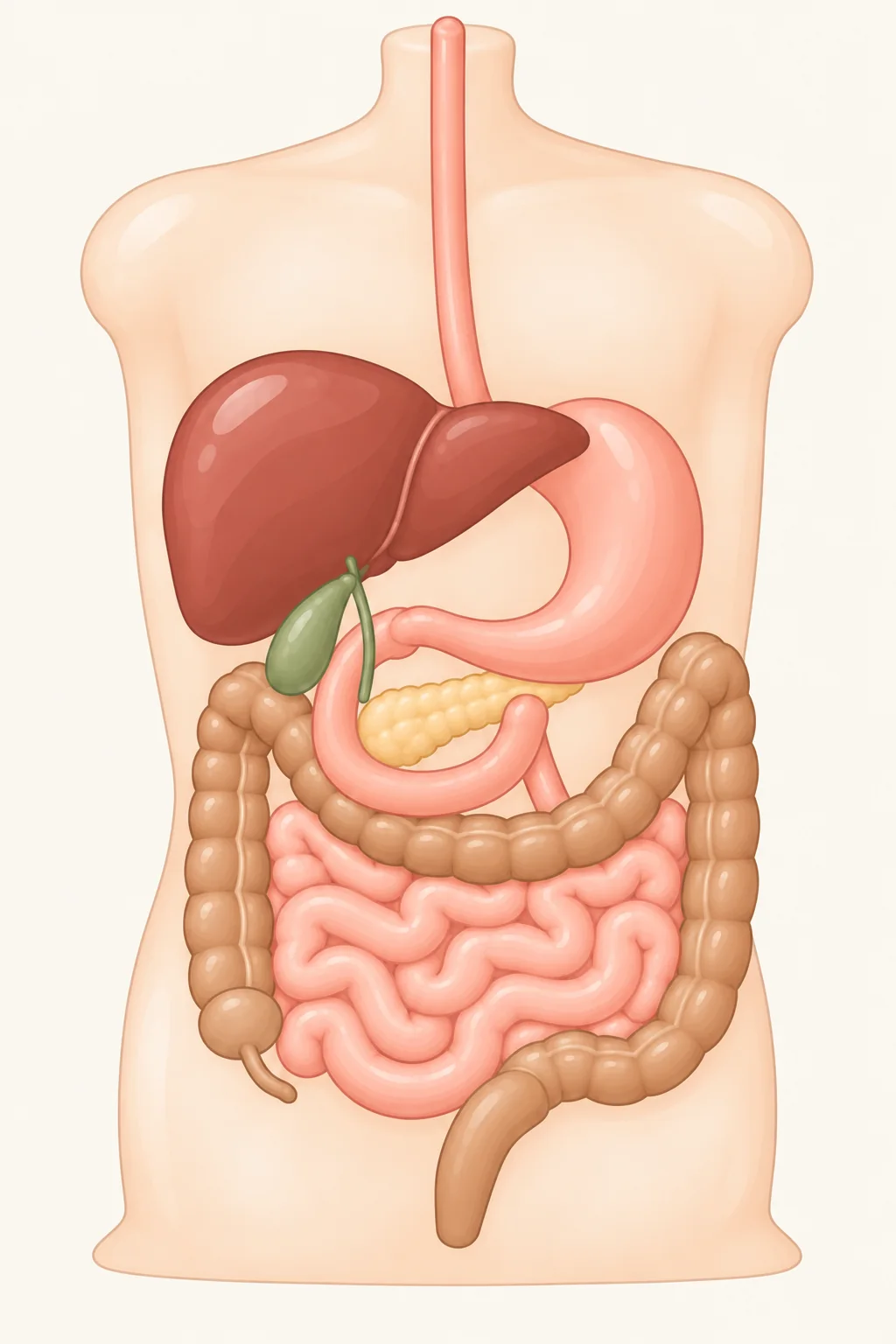
bladderDuodenumRectumEsophagusBody’s rightBody’s left
The liver sits in the upper right part of your belly, tucked up under your ribs next to your stomach. The gallbladder nestles into a shallow groove on its underside.
Bile made in the liver drains down the bile ducts into the gallbladder to be stored until a meal, then moves into the small intestine alongside digestive juices from the pancreas to start breaking down food.
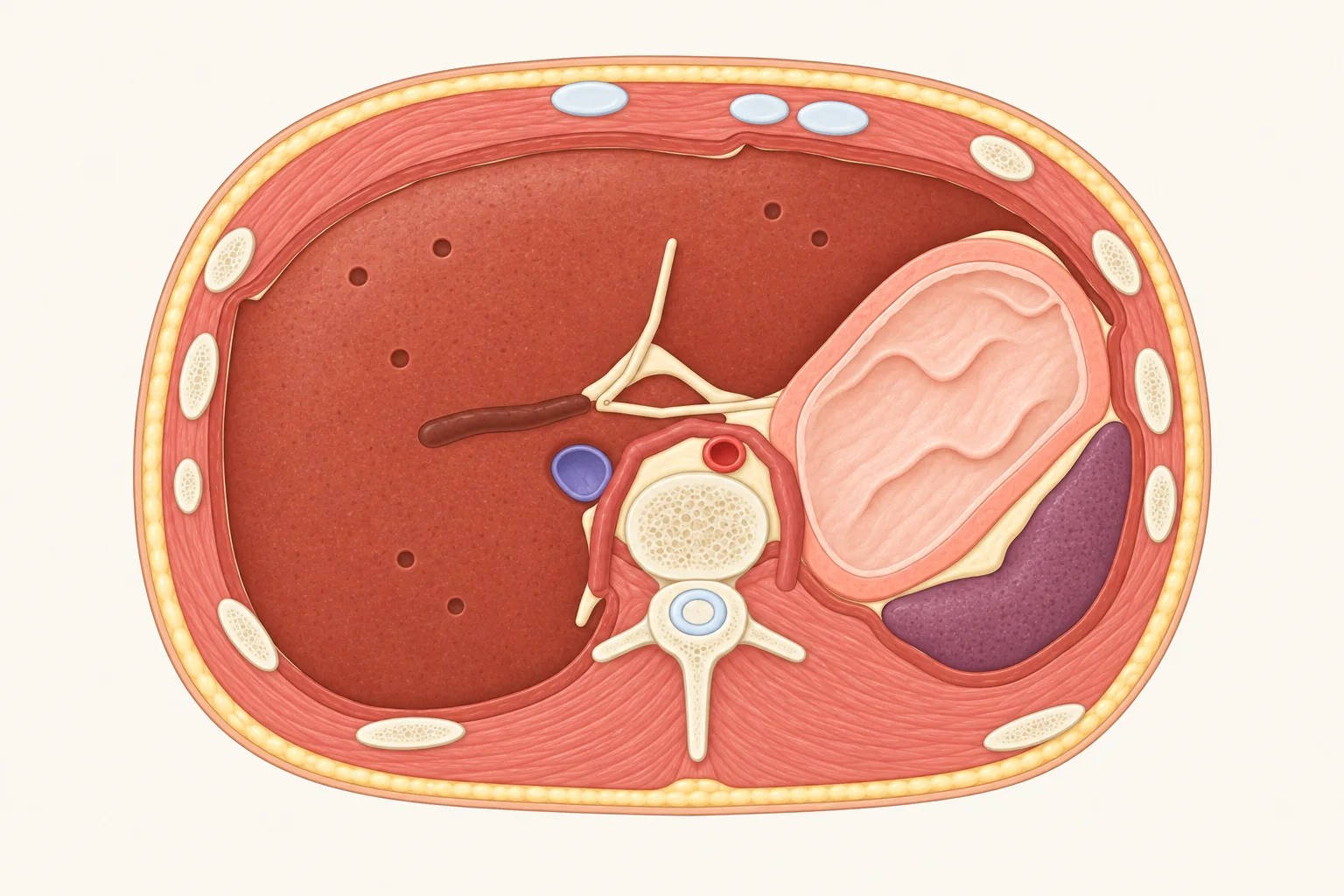
Looking up from the feet: front is at the top, and the body’s right side is on the left. The liver takes up most of this slice, shielded by the ribs with the stomach beside it. See all cross-sections →
What it does all day
- Makes bileBile acids (bile salts) act like dish soap in the small intestine, breaking big blobs of dietary fat into tiny droplets so enzymes can digest them. Waste products like cholesterol and bilirubin also hitch a ride out in bile.
- Handles bilirubinWhen worn-out red blood cells break down, they leave behind a yellow pigment called bilirubin. Your liver packs it into bile so it leaves through your gut. If that exit backs up, bilirubin builds up in your blood.
- Stores and balances blood sugarExtra glucose from meals is stored in the liver as glycogen. Between meals or when you need energy, the liver breaks glycogen back down into glucose and releases it to keep blood sugar steady.
- Makes clotting factorsMany of the proteins that help blood clot and stop bleeding are built by the liver. When the liver is badly damaged and falls behind on clotting factors, you bruise and bleed much more easily.
- Clears toxins and wasteEverything absorbed from your gut – along with medicines, alcohol, old cell fragments, and stray microbes in the blood – passes through the liver to be broken down or converted before leaving your body.
What poop and pee can tell you
Bilirubin’s route splits between your poop and your pee. Most goes out in bile into the gut, where bacteria convert it step by step into the brown pigment that colors poop. A small share gets reabsorbed into the blood and leaves in pee, giving it its yellow color. That’s why liver or bile-duct trouble often shows up in the toilet first – and later leaves signs on your skin and nails, such as bruising easily.
- Brown poopBile is reaching your gut normally. This is what a clear pathway looks like.See poop colors →
- Pale or clay-colored poopToo little bile is reaching your gut, or the duct is blocked, leaving poop without its brown color. Hepatitis, cirrhosis, fatty liver, gallstones, and blocked bile ducts can all cause this. See a doctor if it lasts more than a few days.See organ clues in poop →
- Dark pee, plus yellow skin or eyesWhen bilirubin builds up in the blood instead of draining into the gut, jaundice turns your skin and the whites of your eyes yellow, your pee turns dark, and your skin may itch. If your skin or the whites of your eyes turn yellow, see a doctor the same day.See pee colors →
- Very black poop or vomiting bloodA sign of bleeding in the digestive tract. People with cirrhosis face a specific risk: veins in the lower esophagus can swell and burst, causing heavy vomiting of blood. Go to the ER now if you vomit blood or pass black poop.Know your stomach →
Common liver conditions
Most liver diseases have no symptoms at all early on. By the time jaundice, a swollen belly, easy bruising, or clubbed fingertips show up, damage is often well underway – so if you carry risk factors, getting tested proactively matters.
- Fatty liver diseaseExtra fat builds up inside liver cells. It is very common and usually silent. One type is linked to heavy alcohol use; the non-alcoholic form is far more common in people who carry extra weight (especially around the waist) or have type 2 diabetes, high blood pressure, or high cholesterol.
- HepatitisInflammation and swelling of the liver. Viruses such as hepatitis B and C are common culprits, alongside heavy drinking, certain medicines, toxins, or autoimmune reactions. Chronic hepatitis can run quietly for years without obvious symptoms.
- CirrhosisLong-term liver injury leaves stiff scar tissue in place of healthy cells. Blood struggles to flow through a scarred liver, backing pressure up so fluid pools in the belly and legs and veins in the lower esophagus bulge. Heavy drinking, hepatitis B or C, obesity, type 2 diabetes, and fatty liver all raise risk. Early cirrhosis often feels like nothing.
- Blocked bile ductWhen bile cannot drain out, you get pale poop, dark pee, and jaundice. Gallstones are the most common blockage, though a narrowed duct or a growth in the nearby pancreas can also press it shut. See gallbladder.
When to see a doctor
- Pale or clay-colored poop that lasts for several days
- Heavy alcohol use, excess weight, type 2 diabetes, or past hepatitis B or C infection, and you’re concerned about your liver
- Unexplained itchy skin, easy bruising, or swelling in your belly or legs
See a doctor the same day: yellow skin or whites of your eyes, or pale poop together with very dark pee and yellow skin.
Go to the ER now: vomiting blood, very black poop, or sudden confusion or slurred speech. Don’t drive yourself: have someone take you, or call an ambulance (911 in the US and Canada, 999 in the UK, 112 in the EU).